
Tag Archive for: woodworking education

Gary LeBlanc National Woods Board

Building America’s Next Generation of a Skilled Woodworking Workforce
Susquehanna Valley Technical Institute

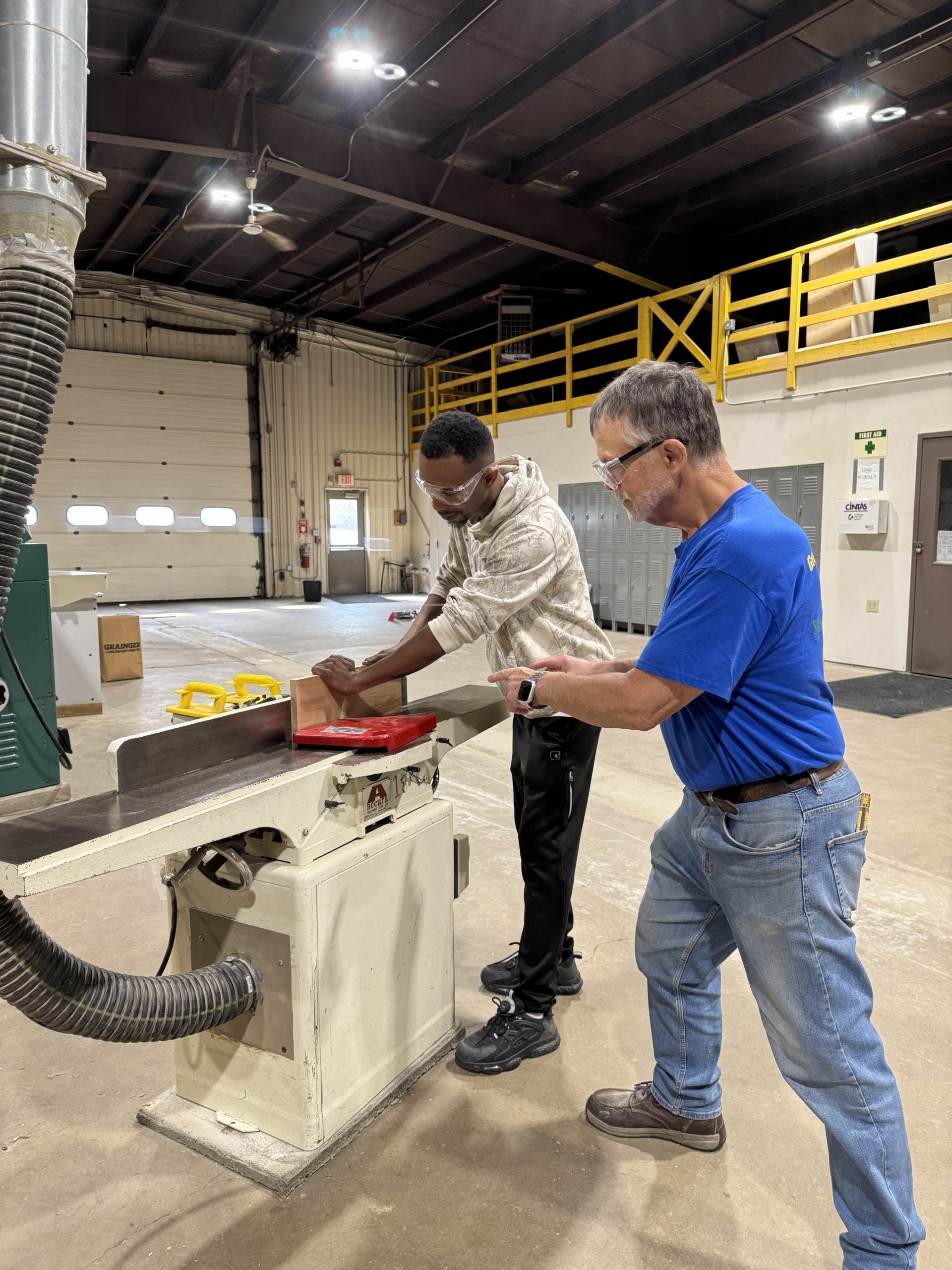
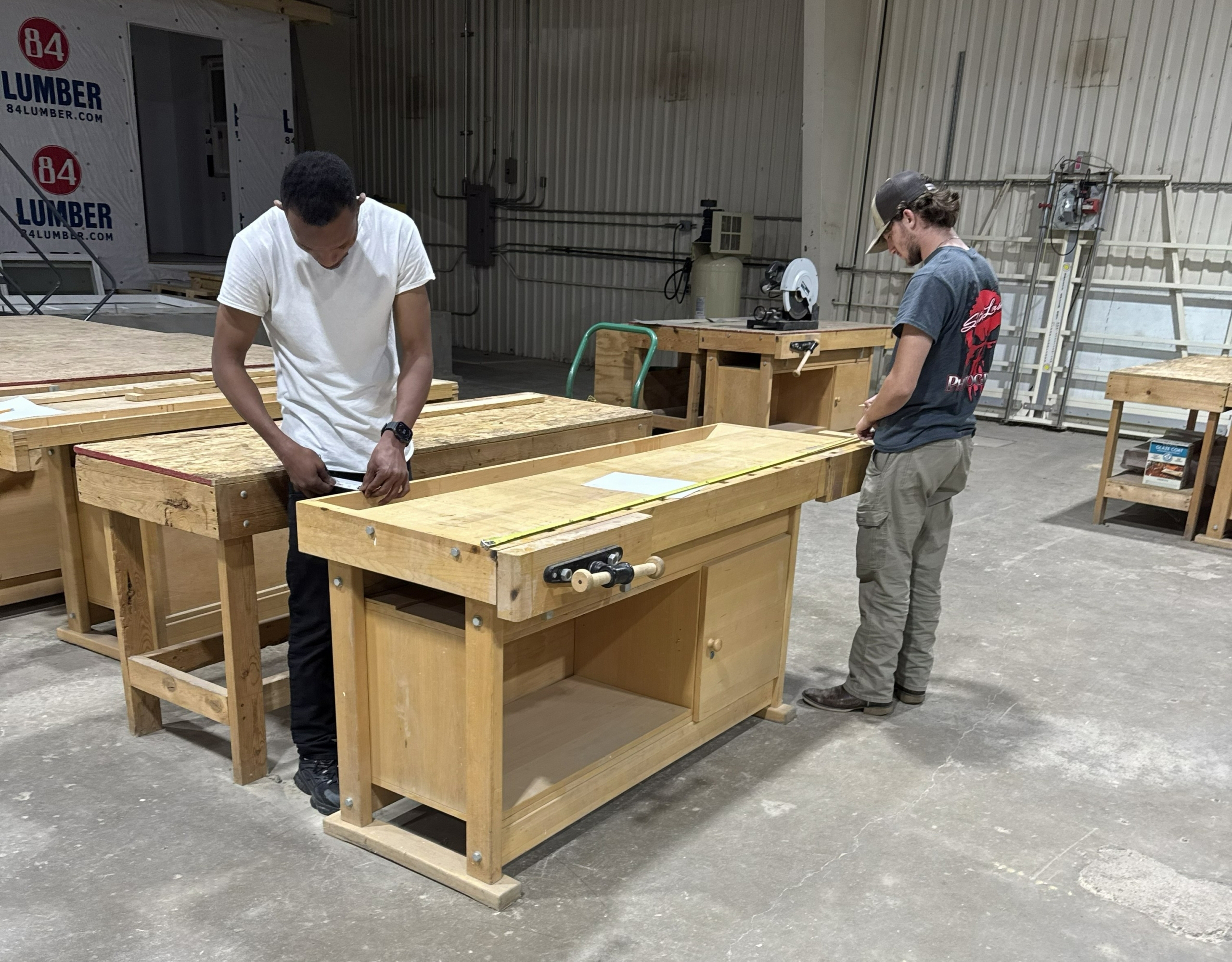
Frank Hanley instructs a student at Susquehanna Valley Technical Institute’s new woodworking program.

America is undergoing a significant demographic shift in its workforce. We have experienced major labor-force transitions before, including the movement of millions of Americans from farms to factories and cities, the labor demands created by World War II, and the entry of the Baby Boom generation into the workforce. Today, we face the other side of that demographic wave as Baby Boomers retire, but none as significant as today.

The U.S. Census Bureau has identified 2030 as an important demographic turning point. By then, all Baby Boomers will be older than 65, and approximately one in five Americans will be of retirement age. These retirements will create tremendous opportunities for younger workers, but they will also create serious challenges for employers.

The problem is not simply replacing people. When experienced employees retire, companies can lose decades of institutional knowledge and technical expertise. This is particularly important in the skilled trades and manufacturing, where proficiency is often developed through years of hands-on experience.

How Did We Get Here?
For decades, young people heard a familiar message: “Go to college. Learn computers. That’s the future.”

At the same time, vocational education and traditional shop programs declined in many schools. The reasons were complex. The 1983 federal report A Nation at Risk called for higher academic standards and stronger graduation requirements, although it also recognized the importance of vocational education. Later policies, including the No Child Left Behind Act of 2001, increased the emphasis on standardized testing and measurable academic performance.

Combined with budget pressures and a growing cultural preference for four-year college degrees, these trends contributed to vocational and technical education receiving less attention in many communities.
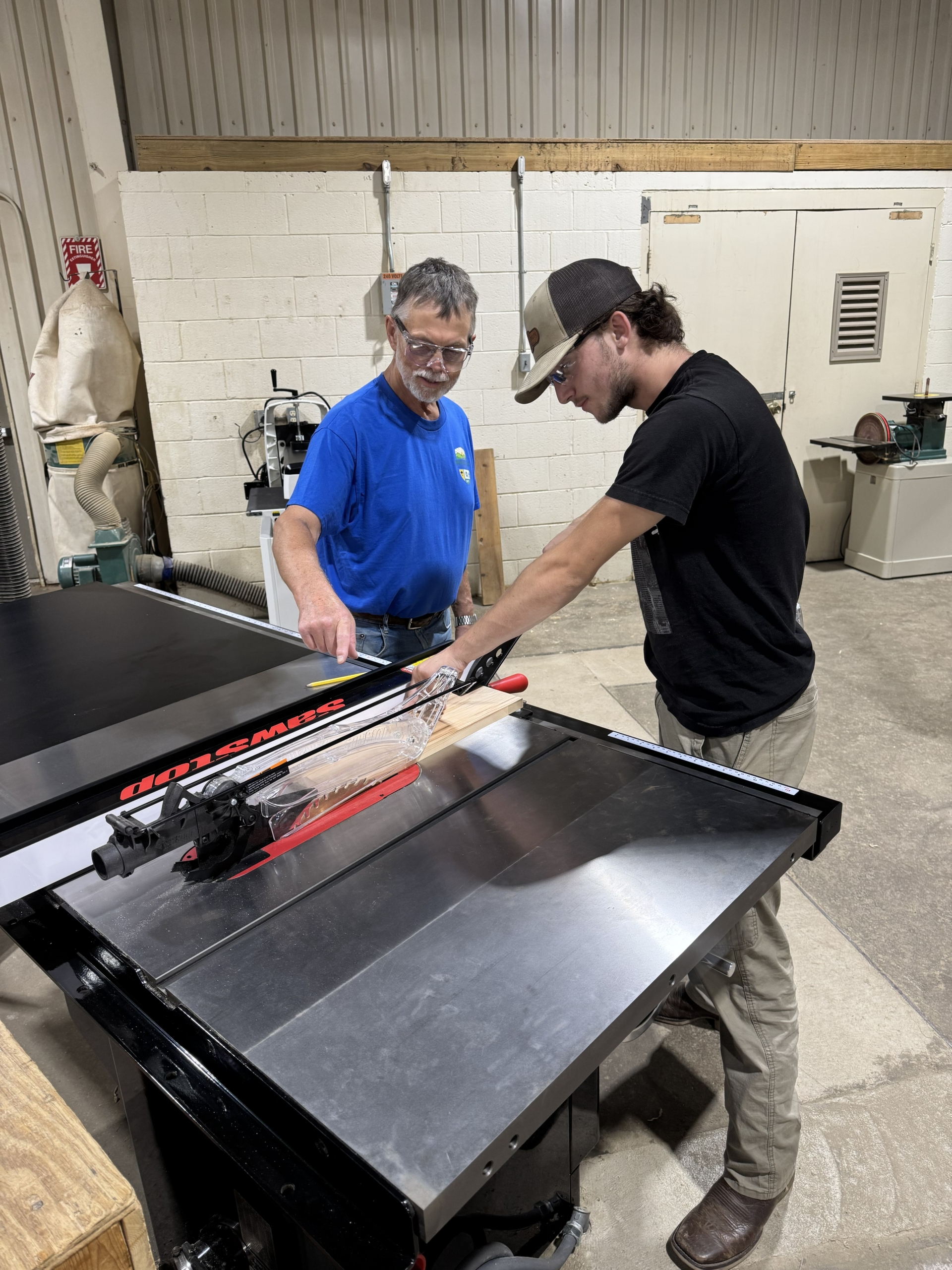
Susquehanna Valley Technical Institute

The timing was significant. The early 1980s were also the beginning of a technological transformation. Personal computers were rapidly advancing, Microsoft Word and Lotus 1-2-3 appeared, ARPANET adopted TCP/IP protocols that helped establish the foundation of the modern Internet, and computer science was increasingly viewed as essential to America’s economic future.

The message to young people was understandable: technology represented the future.

What we failed to appreciate was that technology would also transform manufacturing.

Today’s woodworking facility is not the shop many people remember from decades ago. Modern wood products manufacturing combines traditional knowledge with CNC equipment, computer-aided design and manufacturing, automation, advanced materials, robotics, production systems, and increasingly sophisticated software.

The future was computers. But computers did not eliminate manufacturing. They became part of manufacturing.

What I Learned from the Industry
My involvement in this issue comes through my work with industry trade associations. I serve as Richelieu America’s Organizational Development Director and liaison to organizations including the Kitchen Cabinet Manufacturers Association, Architectural Woodwork Institute, Cabinet Makers Association, Association of Closet and Storage Professionals, and National Woods Board Education Program where I serve as an advisor.

That involvement has given me insight into both the workforce problem and some potential solutions.

The North American wood products industry is large but highly fragmented. CCI Media reports that there are over 145,000 wood product manufacturing companies in North America. Fewer than 2% are members of a trade association. Most believe they can’t leave their shops to invest the time to gain more knowledge. Kitchen cabinets, architectural millwork, closets and storage, furniture, store fixtures, displays, and other segments frequently have their own organizations and priorities. There is no single governing organization.

Construction has been more successful at creating broadly recognized career pathways, apprenticeships, industry standards, and partnerships with high schools and community colleges. Wood products manufacturing would benefit from a similarly coordinated effort to develop the next generation of skilled workers.

A Pennsylvania experiment
My direct involvement in workforce education began through a chance encounter with a customer in Pennsylvania. That introduction eventually connected me with educators, business leaders, and government officials in the Sunbury area who were working to expand postsecondary technical education for a four-county region. This school, known as the Susquehanna Valley Technical Institute, will become Pennsylvania’s 16th community college.

Through my industry associations, I was already familiar with wood products manufacturing curricula, student and teacher certification, textbooks, lesson plans, equipment requirements, and the capital investment necessary to establish a training program.
The effort took more than two years and ultimately contributed to the creation of a wood-products manufacturing course that began instruction on August 24, 2026.

Included in this effort was the establishment of an advisory panel helping the school develop apprenticeship opportunities, advise on curriculum, and connect the program with industry resources and materials.

That experience demonstrated something important: industry does not have to wait for somebody else to solve the skilled-labor problem. Employers, educators, associations, and communities can work together to build solutions. This is the grassroots work that must take place in order to bridge the gap between education and industry.

Bringing the Idea Home to North Carolina
After my work in Pennsylvania, I realized that I was helping address workforce problems elsewhere while doing little about the same problem in the region where I live in North Carolina.
Susquehanna Valley Technical InstituteI volunteered to serve on the CTE advisory panel at Davie High School. The school has strong Career and Technical Education programs, including carpentry and construction, but does not currently offer a dedicated wood products manufacturing program.
That led me to Davidson-Davie Community College.

Davidson-Davie is already actively involved with local employers in developing workforce training and apprenticeship programs, including programs serving advanced manufacturing companies in the region. Given the Piedmont’s long history in furniture and woodworking, I believed there was an opportunity to create a program specifically focused on modern wood-products manufacturing.

I began contacting local businesses and formed an industry advisory group representing kitchen cabinets, architectural woodworking, store fixtures, displays, furniture, and related manufacturing.

Although much of the traditional casegoods furniture industry has disappeared from this region, woodworking has not. Cabinetry, architectural millwork, components, fixtures, displays, closets, and other wood-products manufacturers continue to need skilled employees. Upholstered furniture manufacturing also remains an important part of North Carolina’s economy.

The question became simple: Could we build a modern training pathway connecting these employers with people who want good careers?

From a Tape Measure to CNC
The proposed program at Davidson-Davie begins with one of the most fundamental skills in manufacturing: accurately reading a tape measure.

From there, students progress through woodworking fundamentals, safety, materials, machinery, production methods, and ultimately CNC technology and programming.

Just as importantly, students learn what it means to work in a production environment: safety, quality, reliability, communication, problem solving, teamwork, and personal responsibility.

The curriculum comes from the National Woods Board Education Program and is based on the educational model developed at The MiLL, the Manufacturing Industry Learning Lab in Colorado Springs. The three-phase program combines hands-on technical instruction with industry-recognized standards from the Woodwork Career Alliance of North America combined with an essential ecosystem of collaboration between Industry and Education.

Students can demonstrate their competency through WCA assessments and work toward industry-recognized credentials, beginning with the Sawblade Certificate, Core and Green credentials. The program also uses Modern Cabinetmaking as an instructional resource, while WCA provides standards and training for instructors who evaluate student competencies.

Davidson-Davie has secured a facility in downtown Thomasville and is working to obtain equipment, industry support, and students for a program planned to begin instruction in January 2027.

Manufacturing has Changed
The wood products industry recognizes that advanced skills and advanced equipment are necessary to remain competitive.

The modern woodworking plant is not your grandfather’s shop, or even your father’s shop. Today’s facilities increasingly combine craftsmanship with sophisticated manufacturing technology. CNC routers, automated material handling, optimization software, computerized saws, edgebanders, finishing systems, robotics, and digital production management all require employees who understand far more than how to operate a saw.

That is precisely why education and industry must work together.

America is wealthy enough to buy virtually any product that consumers demand. But there is no guarantee those products will be manufactured in America.

If we want them made here, we need people capable of making them competitively.

The Opportunity
The skilled workforce challenge will not be solved by one company, one trade association, one high school, or one community college. It requires employers, educators, associations, government, parents, and students to recognize that modern manufacturing offers legitimate, technically demanding career opportunities.

Four-year college is an excellent pathway for many students. It is not the only pathway to a successful career.

We need to give young people more choices and make sure they understand what those choices can lead to.In Davidson and Davie counties, we now have an opportunity to build one of those pathways for modern wood-products manufacturing.

The need is real. The curriculum exists. The employers are here. The educational partner is here.

Now we need industry to become involved.

Companies can help by providing equipment, materials, technical expertise, internships, apprenticeships, plant tours, instructors, financial support, and, ultimately, jobs for graduates.

If you would like to participate in building the next generation of America’s wood-products workforce, please email me: gleblanc@richelieu.com.

Gary LeBlanc is Organizational Development Director of Richelieu America. His involvement in woodworking workforce development initiatives extends through his participation with a variety of organizations including the Kitchen Cabinet Manufacturers Association, Architectural Woodwork Institute, Cabinet Makers Association, Association of Closet and Storage Professionals, and National Woods Board Education Program.

COVID Can’t Stop Woodworking Students from Learning and Earning

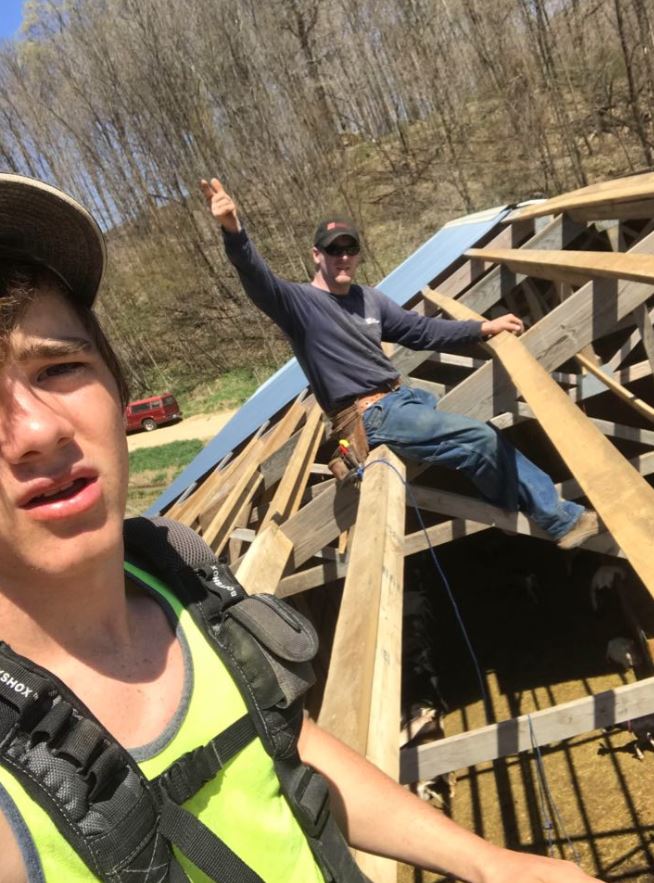
Josiah Pole, a student at Boyceville High School in Boyceville, WI, gets some hands-on experience helping his dad build a shed.

A survey by the Woodwork Career Alliance reveals the unique challenges and ingenuity of teaching woodworking online and the determination of many students to earn their WCA credentials.

NELLYSFORD, Va. — The novel coronavirus pandemic forced the vast majority of schools across the United States and Canada to abruptly shut down for the remainder of the academic year and pivot to a crash course of online learning.

In spite of losing access to hands-on instruction,  179 students representing 13 high schools and postsecondary schools managed to earn their credentials, including Sawblade Certificates or Green or Blue Passport credentials, by successfully taking the Woodwork Career Alliance of North America’s (WCA) online credentialing test. All of these students were fortunate to have completed their machine operating evaluations before most states mandated schools to close to slow the spread of COVID-19.

Some of the instructors whose students attained their credentialswere among the WCA EDUcation members who participated in a survey conducted by the WCA. The survey sought to learn how high school and postsecondary woodworking instructors throughout the United States and Canada met the challenges of transitioning to teaching their students online including what types of information they taught in the absence of hands-on woodworking instruction.

The survey also asked teachers what resources they had developed or tapped into, including those available online to WCA EDUcation members. Their collective responses revealed the use of a wide assortment of educational tools including everything from assigning YouTube woodworking videos and home maintenance projects to quizzes on School.net and having woodworking students assemble UGears laser cut models. Among the WCA resources that were tapped include woodworking videos produced by Patrick Molzahn of Madison College, Fine Woodworking articles and videos and past state SkillsUSA project drawings.

The majority of teachers cited the challenge of transitioning online with very short notice, especially under the pressure of a global pandemic. Yet, many were able to relate silver linings gained from the experience.

“I think that one of the big positives that came out of all this is that although we were kicked out of the classroom, we still got kids certified with the Sawblade certificate and that’s sort of a neat thing,” said Scott Bruening, tech teacher at Kettle Moraine High School of Wales, WI. “We made lemonade out of lemons. That’s all we could do. Another good thing is that we got a crash course of doing things with online learning technology that could become the norm in the next five or 10 years.

Molly Turner, woodworking instructor at Ignacio School District of Ignacio High School, said it was challenging to engage students online, especially considering that woodworking is an elective course. “(N)o no one had time to prepare, plan or transition smoothly into homebound learning. It happened so quickly… On the plus side, it’s broken down some of the barriers of distance and forced everyone to become fluent in technologies that have been out there for a while, but maybe not used extensively prior to COVID-19: Zoom, Google Hangouts, Google Classroom, etc.”

“If there is any upside to this it will be that we are developing more teaching materials and expertise that will allow our students to work in a more independent and self-directed way: whether on a computer in our facility or at home,” said Doug Rappe, lead technical instructor of the Greater West Town Community Development Project of Chicago. “I am sure that some of the work we are doing in Google Classroom will be put to use for future classes for instance so that a student who needs extra review or misses a class can work on his or her own to catch up.”

Roger Peterson, woods instructor at Hurley High School District of Hurley, WI, said in an alternative to hands-on woodworking instruction, he assigned students “around the house” projects. “This is a challenging time and when students see everyone working together to get through this … THAT is what they are truly learning!”

“Hats off to all of the teachers and students who persevered during an extraordinarily challenging finish to the school year,” said Scott Nelson, president of the WCA. “Teaching woodworking online is less than ideal. That’s why I was s impressed by the creativity and resourcefulness that was demonstrated, including those who were able to complete the requirements for their Sawblade certificates and Passport credentials. I’m also extremely pleased that several of the instructors offered videos and documents they produced for the WCA to add to its online resource library to share with other woodworking instructors.”

Read the WCA’s COVID-19 survey report.

About the Woodwork Career Alliance
The Woodwork Career Alliance of North America was founded in 2007 as a 501(c)(3) non-profit corporation and is governed by a volunteer board of directors. The WCA’s mission is to develop and administer a unified set of Skill Standards for the wood products industry. Since 2011, WCA has developed observable and measurable performance standards and assessments for more than 300 woodworking machine operations. In addition, WCA has issued more than 2,500 credentials, a portable, personal permanent record documenting each holder’s record of woodworking skill achievements. More than 130 high schools and post-secondary schools throughout North America are WCA EDUcation™ members and a growing number of woodworking companies have joined the WCA as MANufacturing™ members. To learn more about the WCA and how to get involved with its programs, including sponsorship opportunities, visit WoodworkCareer.org.

The Trials and Tribulations of Teaching Woodworking Online

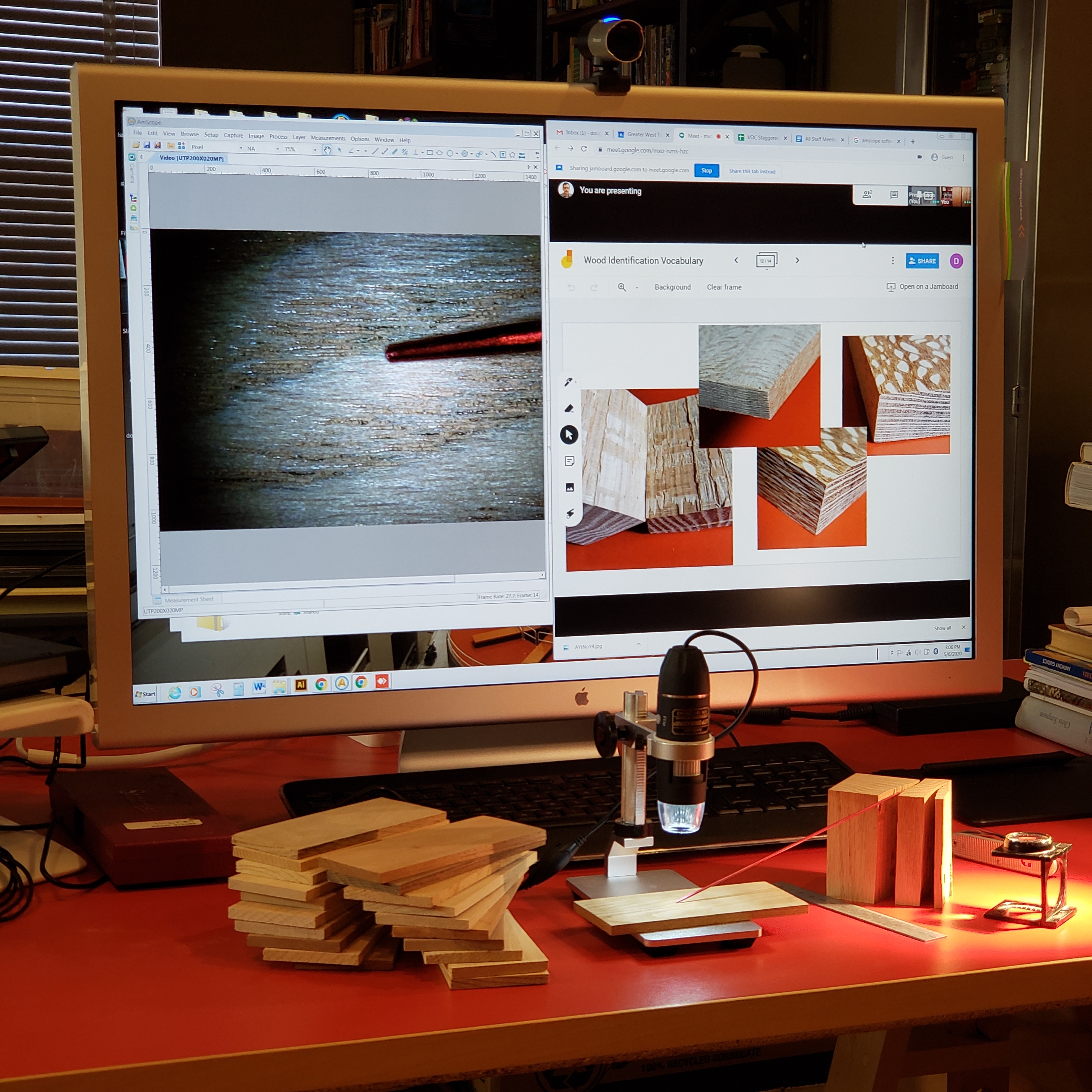
Doug Rappe of the Greater West Town Community Development Project used this setup for teaching a Google Classroom remote wood identification class.

The novel coronavirus pandemic has left an indelible mark on education institutions across North America by forcing the vast majority of schools to close for the remainder of the academic year.

The transition from teaching students in the classroom to online has most especially been fraught with challenges for woodworking instructors belonging to the Woodwork Career Alliance of North America. As if having to dispense with woodshop activities wasn’t hard enough, most teachers were given only a few days of notice that their school was being shut.

With so little warning, they scrambled to develop new lesson plans for online instruction on the fly.

Don Stoneburner, a student at Boyceville High School, proudly displays the WCA Sawblade certificate he earned after successfully completing the online test.

While online learning cannot make up for the hands-on experience of using equipment and tools to create wood projects, woodworking instructors participating in a survey of the Woodwork Career Alliance of North America explained how they revamped their curricula to incorporate a variety of alternative coursework and online resources. This includes taking advantage of videos, woodworking articles, past SkillsUSA project plans and other materials available online to WCA EDUcation members.

In spite of the disruptions created by COVID-19, several of the high school instructors said they already had or were in the process or preparing students to take the online test to earn their WCA Sawblade Certificate. Fortunately these students had already been evaluated on machine setup and operation on jointers, table saws and other basic woodworking equipment before their schools closed.

Some of the key questioned posed in the WCA COVID-19 survey included:

  • How have their programs been impacted by the coronavirus outbreak?
    What types of information are they teaching online?
  • How many educators are accessing the WCA’s resource library and what materials are they using?
  • What tools would they like to see added to the resource library?
  • Would they be willing to “donate” resources they have developed for their program to the WCA’s tool box for use by their peers?

Survey Highlights
Twenty-eight woodworking educators responded to the survey, including 26 high school teachers, one college instructor and one community training program instructor.

Seventy-nine percent of the respondents said their schools were shuttered due to state stay-at-home orders and were teaching classes online. Fourteen percent said their schools were closed and they were not teaching online.

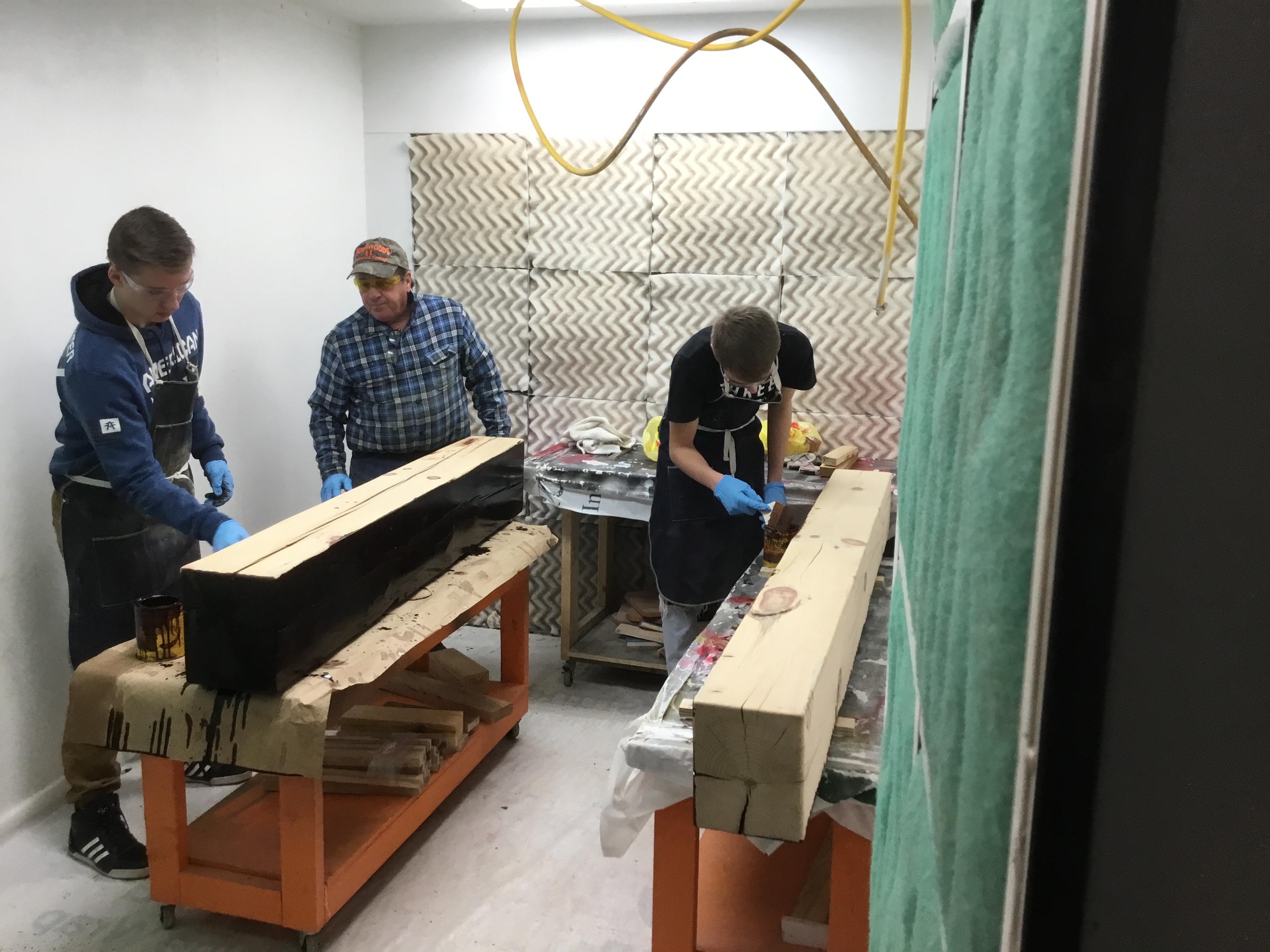
Hurley High School students apply a finish to their woodshop project.

Forty-six percent said they were utilizing WCA online training resources, with several others indicating they planned to take a closer look at the videos and written materials available.

The bulk of the survey was composed of open-ended questions. Most of the teachers participating in the survey gave permission for information from their responses to be directly attributed to them In most cases they were sent questions to clarify or embellish some of their responses.

What follows are encapsulated summaries of how some of the woodworking instructors who took part in the survey have dealt with the shift to teaching classes online.

Frank Fetzer, woodworking, engineering and math teacher, Boyceville High School, Boyceville, WI
Fetzer said he featured measurement demonstrations and tests, YouTube woodworking videos and online discussions have been featured in online classes. In addition, he said he gave students “home maintenance assignments.” “These are not necessarily woodworking, but does give them something hands-on to do at home.” He also had students read/watch Fine Woodworking articles/videos with assigned write ups. Finally, he’s working on helping eligible students pass the WCA Sawblade test. Read expanded commentary.

Mickey Turner, woodworking 1, 2, 3 at John Holmes High School, Edenton, NC
“This whole thing has been hard for me to process,” Turner said. “I am a first-year teacher still learning the process and now this. Especially considering that I just got to the apply power tools agenda. There is no app for woodworking.” In the absence of being able to provide hands-on woodworking instruction for his students, Turner said, “I’ve been giving them bell ringers like school.net test questions, portable and stationary power tool safety procedures and quiz booklets. I have added some short instructional videos on portable power tools and some YouTube videos.”

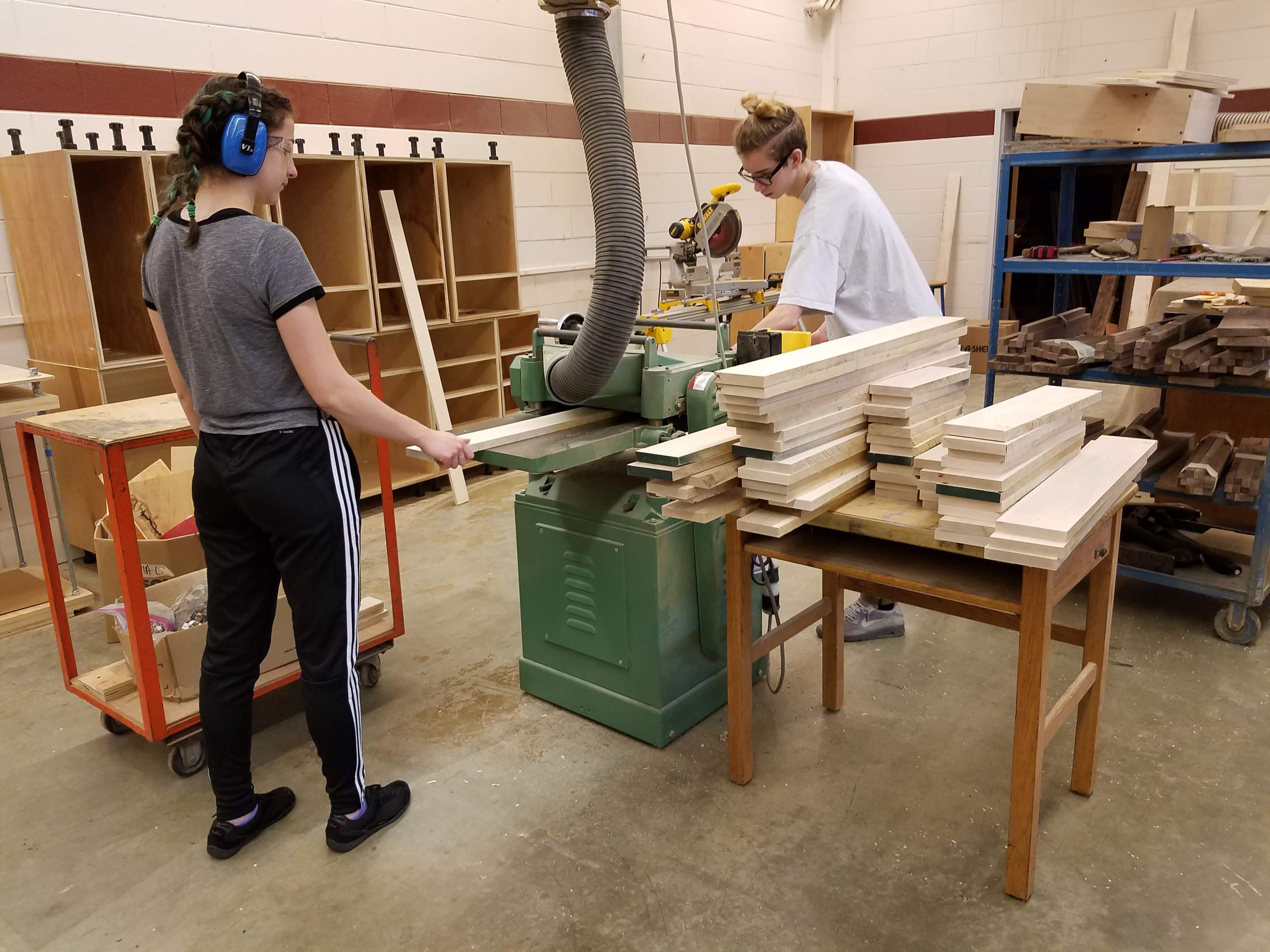
Students work in tandem in Ashville High School’s woodworking shop.

Scott Bruening, tech education teacher, Kettle Moraine High School, Wales, WI
“I’m just finding it really difficult not being able to do anything hands-on at this point,” Bruening said. “I’m just trying to get more resources online for students to access. I’ve been using the older version of the textbook. We’ve focused on techniques and types of joinery in a visual manner, plus vocabulary, key terms and general knowledge items.” Read expanded commentary.

Marc Fry, woods manufacturing instructor, Green Bay East High School, Green Bay, WI
“I am struggling to find any visual examples, formats or layout of any woods instructor online,” Fry said. “Is there a way someone could provide Google classroom-ready slides and worksheets that are easily downloadable along with some kind of answer sheet and key?” Fry added that he taught four sections of Woods 1 and Advanced Woods 2. One online resource Fry mentioned using by name is edpuzzle.com.

Tom Hillstead, cabinetmaking instructor, Saint Paul College, Saint Paul, MN
Hillstead is the only college-level woodworking instructor to participate in the survey. He said he focused on teaching CAD/CNC software; laminates and surfaces; hardware used in casework and estimating. “I have 15 students this semester and they have adapted very well to our adjusted learning environment,” Hillstead said. “It’s not their first choice but… We have five courses this semester, three of which we were able to move online. One course, which was to run the last 8 weeks, will require “gap” instruction once we are able to return to the shop later this summer. It’s been an adjustment for everyone, but overall, it’s been positive. Even though the hands-on experience can never be replaced, my students and I have all learned a lot about the available technology, and I’m looking forward to incorporating where I can into future courses. Lots of videotaped demos!”

John Stearns, instructor, The MiLL and Peyton High School, Colorado Springs and Peyton, CO
In transitioning to online teaching, Stearns said he placed greater emphasis on reading and creating drawings, soft skills like leadership and personal growth, the business of woodworking and cabinet identification. He added that he has used old SkillsUSA project drawings in the WCA’s online resource for students to practice creating a bill of materials.

Roger Peterson, woods instructor, Hurley School, Hurley, WI
“I’m just trying to keep the kids engaged and understand how to do some things online,” Peterson said. “We are project planning for next year, revisiting some WCA Sawblade credentialing material (including measurement) and seeing how we can apply what we learned through the year to work on ‘around the house’ projects. This is a challenging time and when students see everyone working together to get through this … THAT is what they are truly learning!”

Tom Witt, woods manufacturing instructor, Monroe High School, Monroe, WI
“I am a dual credit teacher instructing 47 students online and have access to Patrick Molzahn’s information and videos on the WCA website,” Witt said. “We have focused on technical information and machine safety utilizing text and video demonstrations.” For his beginning level Woods Manufacturing 1 class, Witt said, “I am going through all the machines in the order that we use them to ‘square’ a single piece of stock including radial arm saws, jointers, planers and table saws.”

Doug Rappe, program coordinator, Greater West Town Training Partnership, Chicago, IL
“We are teaching the classroom portion of the curriculum remotely including math, reading, print reading and job readiness,” said Rappe, whose program trains economically disadvantaged adults for woodworking careers. Rappe said he has used some of the WCA videos produced by Patrick Molzahn, director of the cabinetmaking and millwork program at Madison College. Read expanded commentary.

Molly Turner, wood manufacturing instructor, Ignacio High School and Middle School, Ignacia, CO
“I’ve used Fine Woodworking/Fine Homebuilding online access to have students do research and read articles,” Turner said. “We are also getting ready to test students for their Sawblade certificates in my upper level classes. These students have reviewed machine set-up and operation standards. I’m also going to use the Sawblade certificate quiz as part of their final exam.”

Turner said she has utilized a Career Exploration packet that features “two career profiles including salaries, pros and cons, SkillsUSA framework and a resume,” plus UGears model kits with a project log and a product review at the end. “I’m brainstorming on project learning options that can be done at home with no tools, maybe pre-fabricated kits similar to UGears laser-cut models or paper automata karakuri projects,” she added. Read expanded commentary.

Christopher Randall, Asheville High School, Asheville, NC
“My candidates all did the Sawblade certificate performance widget right before we were all sent home,” Randall said. “I digitally reviewed so that they could take their online Sawblade tests. I’ve also used the free Fine Woodworking archives link on the WCA’s website.” Randall added, “Since turnout is low and I am at home practicing social distance and home schooling my own children, I am simply filming videos and sharing building projects with my students. They are sharing back with me what they can build at home.” Read expanded commentary.

Steve Swanson, Wauwatosa West High School, Wauwatosa, WI
“We are designing a kitchen using ADA standards and some household measurements,” Swanson said, adding that he utilized some of the measurement materials available in the WCA’s online resources.

Learn more about WCA EDUcation membership and benefits.

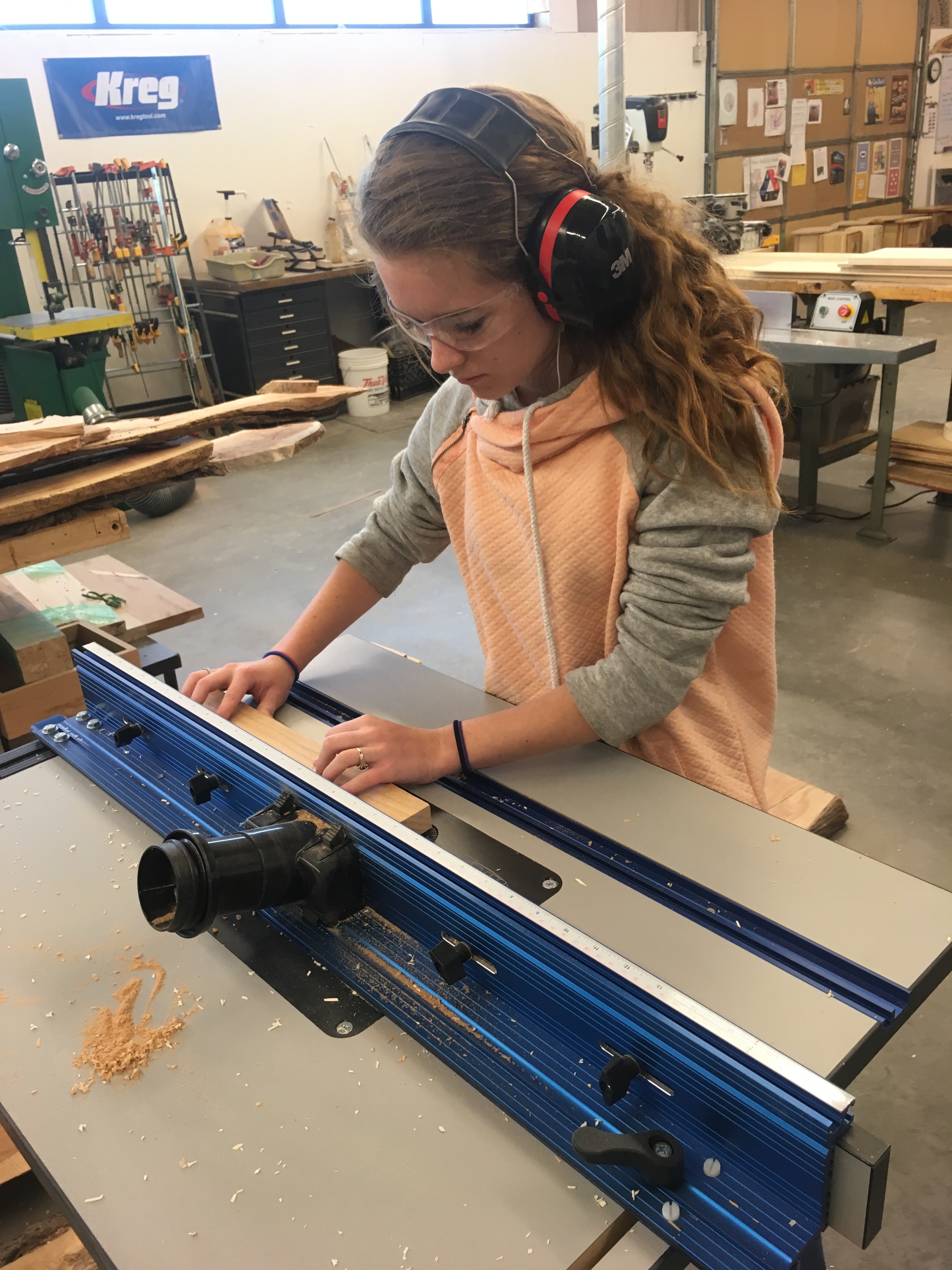
A student at Ignacio School operates a Kreg router back in the pre-COVID-19 pandemic days.

Woodwork Career Alliance to Present Three Free Seminars at AWFS Fair

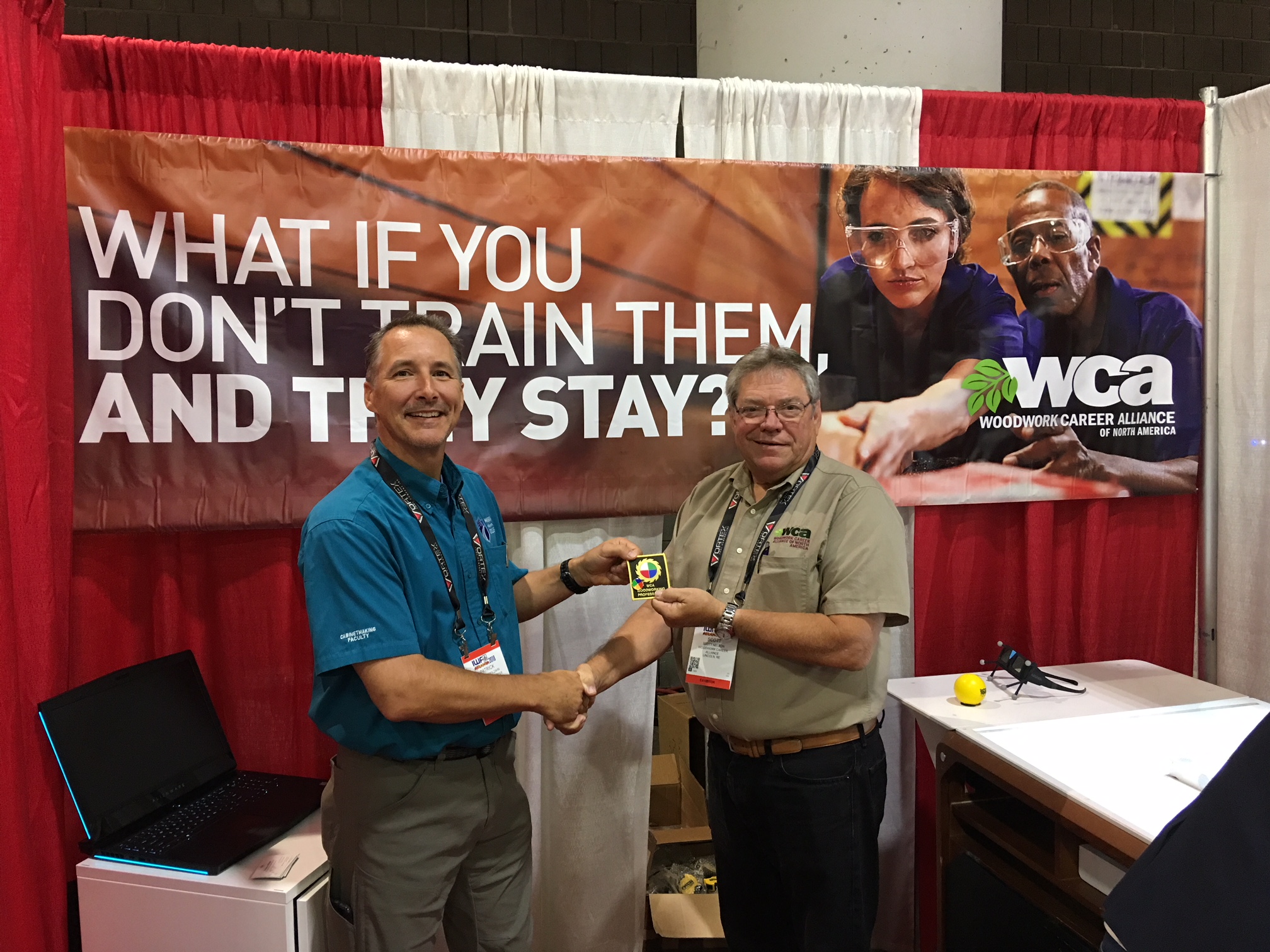
Patrick Molzahn receives the first ever Diamond credential from Scott Nelson, president of the WCA at IWF 2018.

Patrick Molzahn, left, director of the Cabinetmaking & Millwork program at Madison College, and Scott Nelson, president of the WCA, will co-present a seminar on workforce development at the AWFS Fair in Las Vegas. 

Representatives of the WCA will share ideas for developing a skilled woodworking workforce.


Nellysford, VA — Owners and managers of woodworking businesses challenged by a low number of job applicants and/or high employee turnover rate are encouraged to attend free College of Woodworking Knowledge seminar sessions featuring the Woodwork Career Alliance of North America at the AWFS Fair, July 17-20 in Las Vegas.

The WCA is scheduled to participate in a pair of free seminars of the fair’s Culture & Workforce Track and one free seminar in the Teacher track.  The sessions include:

WCA – WIIFM: What’s In It For Me?
1:30 p.m. to 3:30 p.m. Wednesday, July 17
Presenter: Patrick Molzahn, director of Cabinetmaking & Millwork, Madison College and secretary of the WCA
Whether you are in education or in industry, this session will provide ideas that you can use to implement the Woodwork Career Alliance credentialing system to create and manage a training program in your school or business. The presenter, who has used the WCA Skill Standards to shape his curriculum, will demonstrate how to improve your training program and discuss how members can take advantage of the WCA’s online library of videos, educational materials and other training resources to help you accomplish your goals faster and better.

Finding, Training and Retaining Workers
11:30 a.m. to 1:00 p.m. Thursday, July 18
Presenter: Patrick Molzahn, director of Cabinetmaking & Millwork, Madison College and secretary of the WCA
Where are all the workers? If only I could find someone with skills. These millennials just don’t have the work ethic we expect. Does this sound familiar? In a tight labor market, you need to get creative. This seminar will provide strategies to overcome many of the challenges you face recruiting and retaining quality employees.

Building a Training Program for Your Workers
3:30 p.m. to 5:00 p.m. Friday, July 19
Presenters: Scott Nelson, president of the WCA & Patrick Molzahn, director of Cabinetmaking & Millwork, Madison College and secretary of the WCA
Are you looking to create you own in-house training program? This ‘nuts & bolts’ session will show you how to get started and how you can access ready-made resources to make the job easier. The presenters will discuss how to assess new candidates on layout and measurement and how to customize your training template. Come to this session to learn:

  • How to access quality training resources;
  • How to develop and structure a training plan – including creating a template; and
  • The benefits of doing in-house training.

In addition to those three free seminars, instructors of two WCA EDUcation™ institutions will present sessions in the Teacher track. John Stearns of the MiLL is scheduled to talk on Classroom Tool Safety, Teacher Curriculum and Resources, and How to Get Money for Your Program & Spend It Wisely. Mark Smith of Reed Cutler High School will discuss AutoCAD for the Woodworking Program and Marketing Your Program: How to Get Started.

To learn more and register for AWFS Fair seminars, visit awfsfair.org.

###

About the Woodwork Career Alliance
The Woodwork Career Alliance of North America was founded in 2007 as a 501(c)(3) non-profit corporation and is governed by a volunteer board of directors. The WCA’s mission is to develop and administer a unified set of Skill Standards for the wood products industry. Since 2011, WCA has developed observable and measurable performance standards and assessments for more than 240 woodworking machine operations. In addition, WCA has issued more than 2,500 credentials, a portable, personal permanent record documenting each holder’s record of woodworking skill achievements. More than 100 high schools and post-secondary schools throughout North America are WCA EDUcation™ members. To learn more about the WCA and how to get involved with its programs, including sponsorship opportunities, visit WoodworkCareer.org.