James Scarlet Memorial Grant Fund

WIA Accepting Applications for New Scarlett Grant Program and Student Scholarships

Wood Industry AssociationThe Wood Industry Association (WIA) is separately seeking nominations for its inaugural James Scarlett Memorial School Grant Program and its long-running WIA Scholarship Program.

The deadline to apply for each of the programs is January 31, 2026.

About the Scarlett Grant Program
The WIA launched the James Scarlett Memorial School Grant Program to honor the memory and continue the influential legacy of James Scarlett, who died in a plane accident in 2024.

The James Scarlett Memorial School Grant Program is designed to directly support programs that are training future woodworkers.
Eligible educational institutions with an existing or developing woodworking, cabinetry, furniture, industrial design, or related program are invited to apply for a grant.

Funds can be used for:

  • Purchasing woodworking machinery
  • Acquiring software and supplies
  • Supporting an industry-related school trip

Qualification Criteria
To qualify for consideration, applicants must meet the following criteria:

  • Be an accredited K–12 public or private school, recognized educational non-profit, or post-secondary technical school in North America
  • Offer an existing or developing woodworking-focused program
  • Have a program that is fully operational or launching within 18 months of the award date
  • Include documented support from school leadership

Grant applications will be reviewed by judges based on the program’s impact on students and the community, demonstrated financial need, and overall program quality.

Learn more and apply for the James Scarlett Memorial School Grant.

About the WIA Scholarship Program
The WIA Scholarship Program supports any college-bound individual planning to enroll or college student currently enrolled in a wood science or wood technology program.

Eligibility requirements include:

  • The program, regardless of length, must be associated with an accredited two-year or four-year technical school, college, or university in North America.
  • Applicants must have graduated from high school or its equivalent before July 1 of the scholarship year.
  • Candidates must have sufficient academic records to be accepted by an accredited college, junior college, or technical institute.
  • The scholarship is awarded for the fall semester and cannot be used for past expenses.
  • Applicants who will have finished school before the fall semester are not eligible.
  • There are no restrictions based on employment status, sex, race, creed, or nationality.
  • Previous winners are eligible to reapply for scholarship funding, but cannot be awarded more than four times and must reapply each time.
  • Individuals applying for or already in graduate programs are not eligible for scholarship funding.

Learn more and apply for a WIA Scholarship.

National Woods Board

National Woods Board Summarizes 2025 Successes and 2026 Iniatives

National Woods Board

By Amanda Conger
Executive Director
National Woods Board

2025 was a pivotal year for the National Woods Board (NWB). What started as a bold idea—to make high-quality woodworking education accessible, modern, and industry-driven—has evolved into a proven model that is gaining momentum across the country.

I’m excited to share where we are with our program, what we’ve accomplished with education and industry partners, and how we’re planning to scale our impact in 2026.

2025: From Pilot Program to Proven Pathway
In 2025, our primary focus was turning The MiLL Method from a promising curriculum into a repeatable, scalable program that schools and training centers can confidently adopt.

The MiLL Method is a four-level, project-based curriculum designed to move students from foundational skills to advanced woodworking and lean manufacturing practices:

  • Foundations 1: Machine safety, core woodworking skills, basic joinery, and introduction to materials
  • Foundations 2: Advanced joinery, traditional fine woodworking design, and value-added details
  • Foundations 3: Arts & Crafts–inspired design and construction
  • Foundations 4: Lean manufacturing concepts with a James Krenov influence and a focus on real-world shop workflow

Throughout 2025, we worked closely with schools, teachers, and industry employers to refine lesson plans, project sequencing, and assessments so that every component of the curriculum ties directly back to the needs of today’s shops—cabinet, millwork, and closet/storage alike.

Strengthening Assessment and Credentialing
A key milestone has been tightening the alignment between our program and industry-recognized credentials, especially with the Woodwork Career Alliance of North America (WCA).

We focused heavily on:

  • Clarifying formative and summative assessments across the Foundations levels
  • Ensuring that classroom projects support WCA skill standards
  • Making it easier for schools to integrate WCA Passport earning opportunities into their programs

The goal is simple: when students complete the NWB curriculum, employers can trust that they’ve been evaluated on real, measurable skills—not just seat time.

Teacher Training: Equipping Instructors to Succeed
We know that even the best curriculum will fall flat without confident, well-supported instructors. That’s why teacher training was another major emphasis in 2025.

This year, we:

  • Delivered a multi-day teacher training session that walked instructors through NWB program from both a curriculum and implementation perspective
  • Provided an overview of expectations, from project pacing to safety culture to how to prepare students for WCA testing
  • Offered deeper dives into the cabinet projects, grading rubrics, and testing processes, so teachers understand not just what to teach, but why each component matters

Instructors consistently told us that having a clear, industry-backed roadmap—and a peer network to lean on—gave them renewed confidence in growing or even rebuilding their programs.

Industry Partnerships & Workforce Development
The National Woods Board exists at the intersection of education and industry, and 2025 was a year of strengthening that bridge.
Across the country, we continued to cultivate:

  • Partnerships with employers who provide advisory input, tours, job shadows, internships, and equipment support
  • Collaboration with organizations like the Woodworking Industry Association (WIA), North America Building Material Distribution Association (NBMDA), Cabinet Makers Association (CMA), and the Association of Closet & Storage Professionals (ACSP) to ensure that the curriculum reflects the realities of shops of all sizes and specialties

These relationships are not just “nice to have” — they’re the engine that keeps programs relevant, resourced, and connected to real employment opportunities.

Expanding Geographic Reach
Another highlight of 2025 was seeing the NWB programs move from a small cluster of early adopters to a growing network of schools and training providers across multiple states.

We’ve seen interest from:

  • High schools looking to modernize or revitalize traditional shop classes
  • Career and technical education (CTE) centers seeking structured, industry-vetted curriculum
  • Adult and second-chance programs that want to provide hands-on training linked to real jobs

Each new site brings its own strengths and challenges, and each one reinforces the same truth: there is strong demand for woodworking and wood industry careers—when students can see a clear pathway.

Looking Ahead to 2026: Scale, Support, and Sustainability
With the foundation solidly in place, 2026 is about intentional growth—not just “more,” but “better and broader.”
Here’s what we’re focused on in the year ahead:

1. Scaling the NWB Program Nationally
We will continue to onboard new schools and training centers into our program, with particular emphasis on:

  • States and regions with strong concentrations of woodworking, cabinet, and millwork employers
  • Programs that have community and industry backing but need a structured curriculum to fully realize their potential
  • Building regional clusters, where multiple schools in a geographic area can share resources, industry partners, and success stories

2. Deepening WCA Integration
We’re also working closely with the Woodwork Career Alliance to make it even easier for schools to:

  • Integrate WCA skill standards directly into their daily teaching
  • Use the NWB projects as natural checkpoints for WCA Passport achievements
  • Prepare students for credentials that employers recognize and value

Our long-term vision is that a student completing The MiLL Method in high school or post-secondary education is not just “program complete,” but credentialed and career-ready.

3. Strengthening Teacher Support and Community
In 2026, we plan to expand:

  • Teacher training opportunities, including in-person intensives and virtual refreshers
  • A growing peer community of instructors who can share solutions, troubleshoot challenges, and celebrate wins
  • Access to implementation tools such as scope-and-sequence guides, sample schedules, and communication templates for talking with administrators and parents

When teachers feel supported, programs thrive—and students benefit.

4. Building Clearer Pathways for Students
We’re also working to connect the dots for students by:

  • Encouraging stronger links between high school and post-secondary programs incorporating the NWB program
  • Helping schools showcase career pathways into cabinetmaking, millwork, closets, store fixtures, architectural fabrication, and related fields
  • Gathering and sharing student success stories that demonstrate the power of a woodworking education backed by industry

5. Growing Funding and Sponsorship Support
To scale sustainably, we’re actively engaging:

  • Industry sponsors who recognize that investing in education today addresses tomorrow’s workforce shortages
  • Foundations and donors aligned with career and technical education, trades training, and workforce development
  • Partners who can support scholarships, equipment, and teacher training, so programs in under-resourced communities can still deploy high-quality curriculum

How You Can Get Involved
If you’re reading this, chances are you care deeply about the future of this industry. The National Woods Board would love to partner with you.

You can:

  • Financially support the NWB so we can continue our mission
  • Help connect us with schools or training centers in your area that are ready for a modern, industry-backed woodworking curriculum
  • Serve on a local advisory committee for a participating school
  • Host tours, student visits, or teacher externships at your facility

The woodworking industry is at its best when it collaborates rather than competes—especially when it comes to building the next generation.

On behalf of the National Woods Board, thank you to everyone who contributed time, resources, and expertise in 2025. We’re proud of what we’ve built together—and we’re just getting started.

If you’d like to learn more about the NWB program or explore partnership opportunities for the future, reach out to me at director@nationalwoodsboard.org.

Learn more at nationalwoodsboard.org.

AWI Educational Foundation Accepting Applications for Woodworking Program Grants and Student Scholarships

The Architectural Woodwork Institute Educational Foundation (AWIEF) is accepting applications for student scholarships and woodworking education program grants.

The deadline for submitting scholarship applications is January 31, 2026. The deadline for Academic Grant Program applications is March 31, 2026.

AWIEF Scholarship Program
AWIEF allocates funds to a yearly scholarship fund, ensuring deserving students receive the support they need.

The scholarships cover:

  • Tuition fees for woodworking courses or programs.
  • Materials and resources necessary for practical projects.

To qualify:

  • You must be a student in an accredited woodworking or related program.
  • Show a strong passion and dedication to the woodworking industry.
  • Demonstrate academic excellence and clearly envision your future in the industry.

Learn more and apply at AWIEF Scholarships: Cultivating Woodworking Excellence

AWIEF Academic Grant Program
The AWIEF Academic Grant Program empowers schools specializing in architectural woodworking. Each year the program provides up to $100,000. The grant program prioritizes not-for-profit high schools and postsecondary schools that excel in architectural woodworking, emphasizing technological advancements and skillful craftsmanship.

Learn more and apply at AWIEF Grants: Empowering Woodworking Education

36 Ways to Partner with Your Local School’s Woodworking Program

The North American Building Material Distribution Association (NBMDA) published “How Can Distributors Partner with Local Schools.”

The hand-out was authored by Mark Smith, former woodworking instructor at Reed Custer High School in Braidwood, Illinois, and now Brand Ambassador for Microvellum as well as chairman of the Woodwork Career Alliance of North America’s Education Committee.

Smith identifies 36 potential ways to developer closer ties with high school and postsecondary CTE programs, including woodworking.

Ideas run the gamut from “Make a presentation to the administration and school board at a board meeting” to “Participate in initiatives that foster awareness and move industry forward – new DOL apprenticeships.”

While the title of the piece specifically names “Distributors,” its contents apply to woodworking companies as well.

Learn more about the NBMDA, which is a Gold Sponsor of the WCA.

DOWNLOAD THE PUBLICATION


Kristine Cox Rowland Woodworking

Woodworking Network Honors Kristine Cox as Market Leader

Kristine Cox, vice president of administration for Rowland Woodworking, and a member of the Woodwork Career Alliance of North America’s Board of Directors, was recently honored as a “Market Leader” by Woodworking Network.

The award recognizes Cox not only for her work at R0wland Woodworking alongside her husband Jeff, but also for her dedicated efforts to develop the next generation of woodworkers through her long service with the Architectural Woodwork Institute, SkillsUSA and the WCA.

Read Woodworking Network’s article. 

Scott Nelson president woodwork career alliance

President’s Message: WCA’s Online Training Courses Now Available

I am pleased to report that the WCA recently launched a series of online training courses designed to provide a foundational understanding of woodworking for new employees. This new initiative aims to help wood manufacturing companies overcome the challenges of in-house training and accelerate their new hires’ productivity. The courses might also be of benefit to current employees.

The currently available modules include:

  • WCA Overview: Introduces the WCA’s mission, skill standards, and credentialing process.
  • Math, Measuring and Layout: Covers workshop-related math, including fractional math, and fundamental measuring and layout techniques.
  • Wood Theory: Takes a deep dive into the properties of wood, wood movement, and lumber measurement.
  • Milling and Machining: Teaches basic milling and machining operations, including how to mill a board “4 Square” using standard equipment.
  • Woodworking Fundamentals: Explores panel products, adhesives, fasteners, joinery, and cabinet construction.

The courses are available free of charge to employees of companies with a current WCA MANufacturing™ Membership and to students at schools with an EDUcation™ Membership.

*****

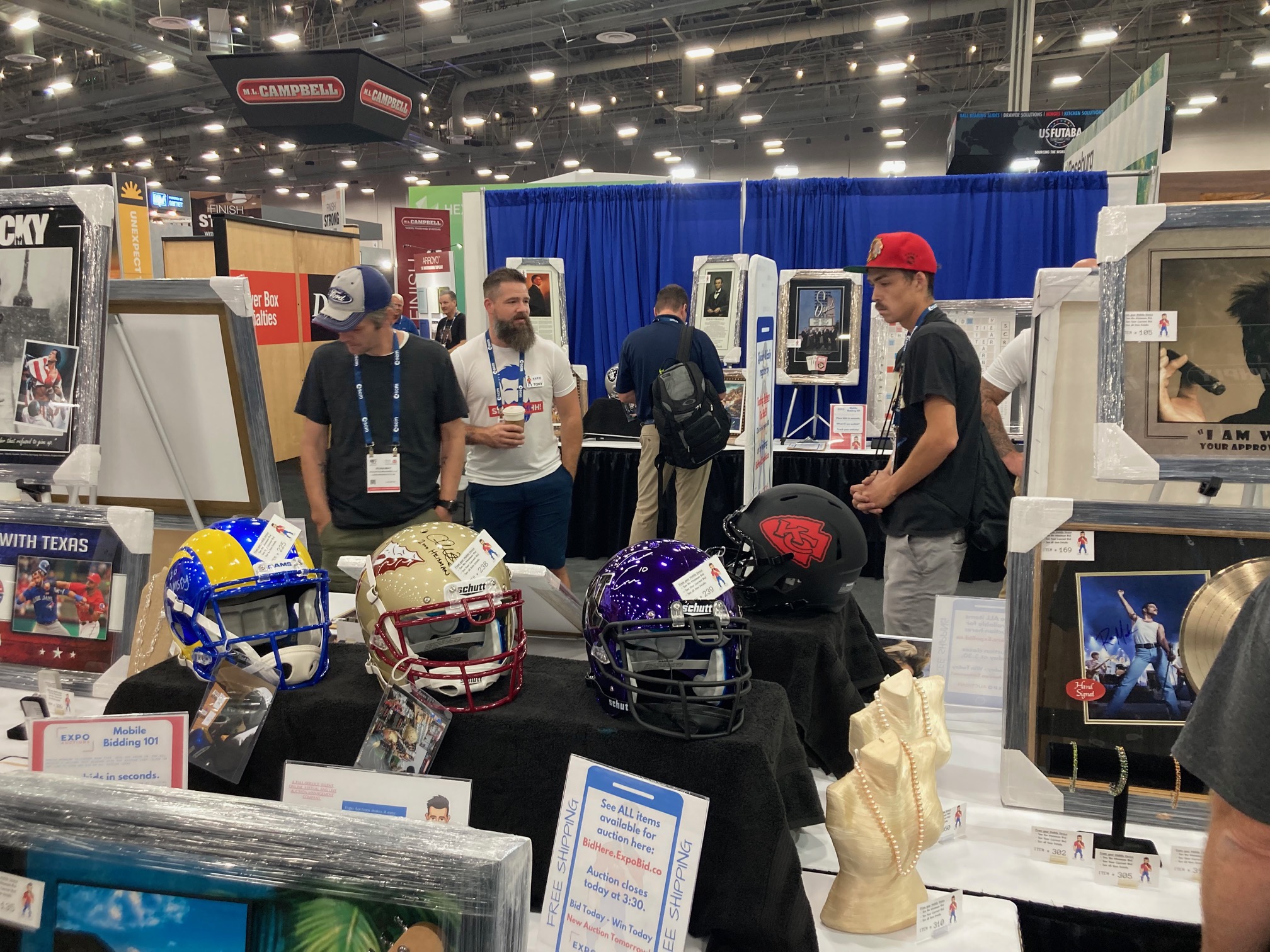
Ten woodworking teachers attended the AWFS Fair, July 22-25 in Las Vegas with the support of scholarship money from the WCA.

Each of the teachers told us that the education they received from the classes they attended, and the time spent visiting with exhibitors on the show floor was an invaluable experience. They all appreciated the ability to gain continued education through seeing what is new and exciting in our secondary processing industry.

Thanks to the continued support of our GOLD and SILVER Sponsors, WCA is able to continue to offer our EDUcation members the opportunities to participate in our industry’s most important tradeshows.

*****

WCA’s overhaul of the Passport Program Registry is approximately 50% complete and is right on schedule. We will be preparing new training material for educators so they will be able to understand how it operates and start using it during the Spring 2026 semester. Look for an update in the next Pathways newsletter.

*****

Last but not least, a big shout out to Jon Cerio, ACE Academy Instructor at Gov. John R. Rogers High School in Puyallup, Washington. Jon was just honored with the 2025 Harbor Freight Tools for Schools (HFTS) Prize for Teaching Excellence. He is the third WCA EDUcation teacher to win this prestigious award in the last four years.

Congratulations, Jon!

Sincerely,

Scott Nelson
President
Woodwork Career Alliance of North America
snelsonwca@gmail.com

Welcome New Members & Sponsors!

The Woodwork Career Alliance of North America is pleased to welcome the following new members and renewing sponsors.

Thank you for your membership and support!

New EDUcation™ Member
Coe-Brown Northwood Academy – Northwood, NH

New MANufacturing™ Members:
The Scobis Company – Chesterfield, MO
UDI – Rogers, AR

INDustry™ Gold Sponsor Renewals

Grizzly Industrial — Bellingham, WA
KCD Software – Catamunet, MA
Kreg Tool
– Ankeny, IA

New INDustry™ Silver Sponsors
C.R. Osnrud — Troutman, NC
Crows Nest Software – Olympia, WA
Dodds, Wyoming, MI
Safety Speed Manufacturing – Ham Lake, MN

INDustry™ Silver Sponsor Renewal
GDP-GUHDO
— Marietta, GA

View all WCA INDustry™ Sponsors & Supporters.


Learn more about the benefits of becoming a WCA sponsor.

WCA EDUcation Instructor Jon Cerio Wins Harbor Freight Teacher Excellence Prize

Richard Lasso, Superintendent, left; Maija Delaquin Executive Director Innovation and College/Career Readiness; Jon Cerio ACE Academy Instructor; and Jason Smith, Rogers High School Principal celebrate Cerio’s Harbor Freight Tools for Schools Teacher Excellence award.

Cerio is the third Woodwork Career Alliance Educator in four years to be honored in Harbor Freight Tools for Schools annual awards program.

LINCOLN, Neb. — Jon Cerio, ACE Academy Instructor at Gov. John R. Rogers High School in Puyallup, Washington, was honored with the 2025 Harbor Freight Tools for Schools (HFTS) Prize for Teaching Excellence.

Cerio, a long-time EDUcation member and accredited skill evaluator of the Woodwork Career Alliance of North America (WCA), was among 25 high school skilled trades educators to be recognized in Harbor Freight Tools for Schools’ annual awards program. As a result, the RHS Trades program earned a $35,000 prize and an additional $15,000 went to Cerio.

Cerio is the third instructor from a WCA EDUcation school to win the prestigious award in the past four years, joining Staci Sievert of Seymour High School, Seymour, Wisconsin, and John Stearns of Amity High School, Amity, Oregon, who won the award in 2021 and 2024 respectively.

In announcing this year’s winners, HFTS emphasized Cerio’s focus on teaching “real-world application of hands-on trades skills. Whether students are college-bound, non-traditional, AP kids seeking diversification, or struggling with core classes, Cerio aims to build their confidence, problem-solving abilities, and work ethic.”

In addition, HFTS recognized Cerio in several “notes of excellence,” including:

  • Maintaining a database of his former students since 2014 in which he keeps track of their employers, job titles, and contact info so he can connect current students with alumni for mentorship, advice, and real-world opportunities.
  • Students who complete all three years of Cerio’s program can earn up to 22.5 college credits through articulation agreements, giving them a major advantage after graduation.
  • Female enrollment in Cerio’s program increased from 1 percent to 10 percent after he piloted an “All Girls Shop” course to introduce the trades to young women in a comfortable, empowering space.

“Winning the Harbor Freight Tools for Schools Prize shines a spotlight on shop class, reminding our students and community that it’s not only still here, but thriving,” Cerio said. “This recognition helps make shop visible again, highlighting its relevance and the value of industry-recognized skills as we build toward an even bigger future.”

“We are thrilled to see Jon Cerio honored by Harbor Freight Tools for Schools. Jon is an outstanding example of how WCA-accredited instructors are using our standards to connect high-school students with real-world industry needs and career pathways,” said Scott Nelson, president of the WCA. “To have three WCA EDUcation members win this prestigious prize in four years validates the importance of teaching verifiable, industry-recognized skills in the classroom.”

Cerio and Rogers High School were among 25 instructors and their programs to share in $1.5 million awarded by HFTS this year. Now in its ninth year, the prize was created to recognize excellence among high school skilled trades teachers, a group of educators HFTS notes, “are frequently overlooked and underappreciated.” More than $10 million has been awarded to more than 180 teachers and their programs through the prize.

About Harbor Freight Tools for Schools
Harbor Freight Tools for Schools is a program of The Smidt Foundation, established by Harbor Freight Tools owner and founder Eric Smidt, to advance excellent skilled trades education in U.S. public high schools. With a deep respect for the dignity of these fields and for the intelligence and creativity of people who work with their hands, Harbor Freight Tools for Schools aims to drive a greater understanding of and investment in skilled trades education, believing that access to quality skilled trades education gives high school students pathways to graduation, opportunity, good jobs and a workforce our country needs. Harbor Freight Tools is a major supporter of the Harbor Freight Tools for Schools program. For more information, visit hftforschools.org

About the Woodwork Career Alliance
The Woodwork Career Alliance of North America (WCA) is a 501(c)(3) non-profit corporation founded in 2007. Governed by a volunteer board of directors, the WCA’s mission is to develop and administer a unified set of Skill Standards for the wood products industry. Since 2011, WCA has developed observable and measurable performance standards and assessments for over 240 woodworking machine operations. The WCA has issued over 6,000 Passport credentials, a portable, personal permanent record documenting woodworking skill achievements. Over 140 high schools and post-secondary schools across North America are WCA EDUcation™ members, and a growing number of woodworking companies have joined as WCA MANufacturing™ members. To learn more about the WCA and how to get involved, including INDustry™ Sponsorship opportunities, visit woodworkcareer.org.

How Avery Pipkin’s Woodworking Program is Crafting Career-Ready Students

Using the Woodwork Career Alliance’s credentialing program helps guide students from basics to advanced skills.


Cedar Ridge High School Students earn Green woodworking credential from Woodwork Career Alliance

Joshua Scism and Tyson Oswald, students at Cedar Ridge High School, display their Green credentials awarded by Scott Nelson, president of the Woodwork Career Alliance of North America, left. Joining in the ceremony is Avery Pipkin, woodworking instructor at Cedar Ridge High School.

At Cedar Ridge High School in Hillsborough, North Carolina, the woodshop is a serious career and technical education (CTE) program where students have the opportunity to become industry-ready woodworkers.

At the helm is Avery Pipkin, a teacher whose own journey is deeply rooted in learning woodworking at Montgomery Central High School under Dan Kern, a chief skill evaluator for the Woodwork Career Alliance of North America (WCA). Pipkin double-downed on his love for high school woodworking by pursuing two years of furniture design followed by two years of industrial arts teaching at Appalachian State.

Pipkin’s desire to improve his woodworking skills is further evidenced by his association with the WCA. As a high schooler, he was the first in Montgomery County to earn his WCA Sawblade credential. He has subsequently upped his game by earning his Green then Blue credentials. He currently has his sights on the WCA’s Red credential.

Now as a teacher and a WCA accredited skill evaluator, Pipkin is helping his students earn WCA credentials. Using the WCA Skill Standards and credentialing system as the foundation of his high-performing program, Pipkin doesn’t just teach projects. He teaches industry-validated processes. The WCA framework provides a cohesive structure that guides students through the practical skills demanded by modern woodshops.

“The skill standards cover the basic woodworking operations,” Pipkin explains. Students are expected to master the entire milling process on a board, moving sequentially from the radial arm saw to the planer, jointer, table saw, and miter saw. “Every project that I plan, I try to think about WCA standards that I can talk about throughout the project.”

This progressive, standards-based approach is tied directly to a hierarchy of professional credentials, starting with the Sawblade Certificate and advancing to the Core and Green credentials.

A Hot Commodity
Pipkin’s classes are a hot commodity at Cedar Ridge High School. His Woodworking 1 class, which holds 20 students, is offered three times a year, generating 60 total spots. An astounding 500 students typically compete for those few openings.

Woodworking 1 students start with the basics, culminating in the construction of a small toolbox—a project requiring them to use different joinery techniques like biscuits and pocket screws, and master fundamental tool use like pre-drilling and countersinking.

The WCA Sawblade Certificate is the goal of Woodworking 2, where students build a Shaker table. Pipkin notes this is often the hardest credential to attain, as it requires mastering prerequisites like accurate tape measure reading and maintaining the correct feed rate on the table saw without causing “burn marks.”

Furniture 3 focuses on complex case goods, like nightstands with doors and drawers, allowing students to earn their WCA Core Credential.

In Advanced Studies, students can achieve the WCA Green Credential, the first full credential that validates a broad depth of experience on core tools.

Pipkin proudly displays his own WCA credentials in his office, creating a visual goal for his students. He stresses that these credentials are a “resume builder” that sets students apart.

“These credentials show an employer that the student knows how to do all of these important operations,” he says. Regarding students who’ve earned the Green credential, Pipkin says, “I would feel confident right now putting them in a woodshop and letting them work. They can read a set of plans and they can build a project. Those are the skills typically included in a job description.”

From Woodshop to Winners’ Circle
Pipkin’s standards-based curriculum serves as the launchpad for exceptional competitive success, particularly in SkillsUSA and the AWFS Freshwood student design competition. The WCA Sawblade Certificate is a de facto prerequisite for students competing in the advanced Cabinetmaking contest.

Joshua Scism represented the state of North Carolina in the 2025 SkillsUSA National Cabinetmaking Competition held in Atlanta.

The Cedar Ridge program’s recent achievements are nothing short of phenomenal:

  • State SkillsUSA Sweep: At the 2025 North Carolina SkillsUSA State Conference, Cedar Ridge students dominated the Cabinet Making categories. Joshua Scism earned the Gold Medal in Cabinet Making, and Tyson Oswald took the Silver Medal. Scism went on to represent the state at the SkillsUSA National Cabinetmaking Competition in Atlanta. At the introductory level, the team also saw great success, with Ava Smith winning Silver and Mason Pierce taking Bronze in Cabinet Making 1.
  • National Recognition: Both Scism and Oswald were finalists in the AWFS Freshwood student design competition and were awarded their WCA Green Credentials at the AWFS Fair in Las Vegas—a huge validation of their high-level skills.
  • Broader Success: Beyond woodworking, Cedar Ridge students have excelled in contests like Castle What’s Your Angle?, in which Thomas Matthews was crowned champion and Smith earned honorable mention.

Pipkin, who also serves as a SkillsUSA advisor, draws extra motivation from his own competitive history. Three times he says he competed and lost to students taught by his predecessor “the legendary” Keith Yow in state SkillsUSA competition. Now, he is proud to build on Yow’s legacy. His program’s perennial placement at the top of the state competition, including Scism’s representing North Carolina in the SkillsUSA national championships this year, is a testament to the comprehensive preparation his students receive.

Fostering Community and the Next Generation
Pipkin understands that a successful CTE program requires more than just a great curriculum—it needs a supportive community. He actively invites school board members, superintendents, and county media to contests, which has resulted in great support for the program and positive local press. His efforts paid off big time.

“I’ve gotten a lot of support from the school board and a nice story about my program was in the county newspaper. I’ve had more people asking how they can support my program.

“So far, my favorite thing, is seeing the success of all my students. It really means a lot when parents come up to me and say, ‘Thank you for providing this opportunity for my kid and stuff like that.”

Lincoln East HS Students Take First and Honorable Mention in Fresh Wood Contest

Tension & Flow by Ky Frederick Crossroad Coffee Table by Tyler Harris

Ky Frederick, a student at Lincoln East High School, won first place for “Tension & Flow” in the Design for Production category of the Freshwood student design and build competition at the 2025 AWFS Fair in Las Vegas.

Meanwhile, Tyler Harris, also of Lincoln East High School, earned an honorable mention for his “Crossroads Coffee Table.”

For their efforts, Frederick earned $1,000; Harris was awarded $250.

Lincoln East High School, located in Lincoln, Nebraska, is an EDUcation member of the Woodwork Career Alliance of North America.

Fresh Wood, created and hosted by AWFS Fair since 1999, brings together high school and post-secondary students from woodworking programs across North America to compete in several categories. Finalists’ pieces were displayed at show.

This year’s Fresh Wood competition was sponsored by KCD Software, a Gold sponsor of the WCA.

View all 2025 Fresh Wood winning projects.