Carving a New Path for High School Woodworking
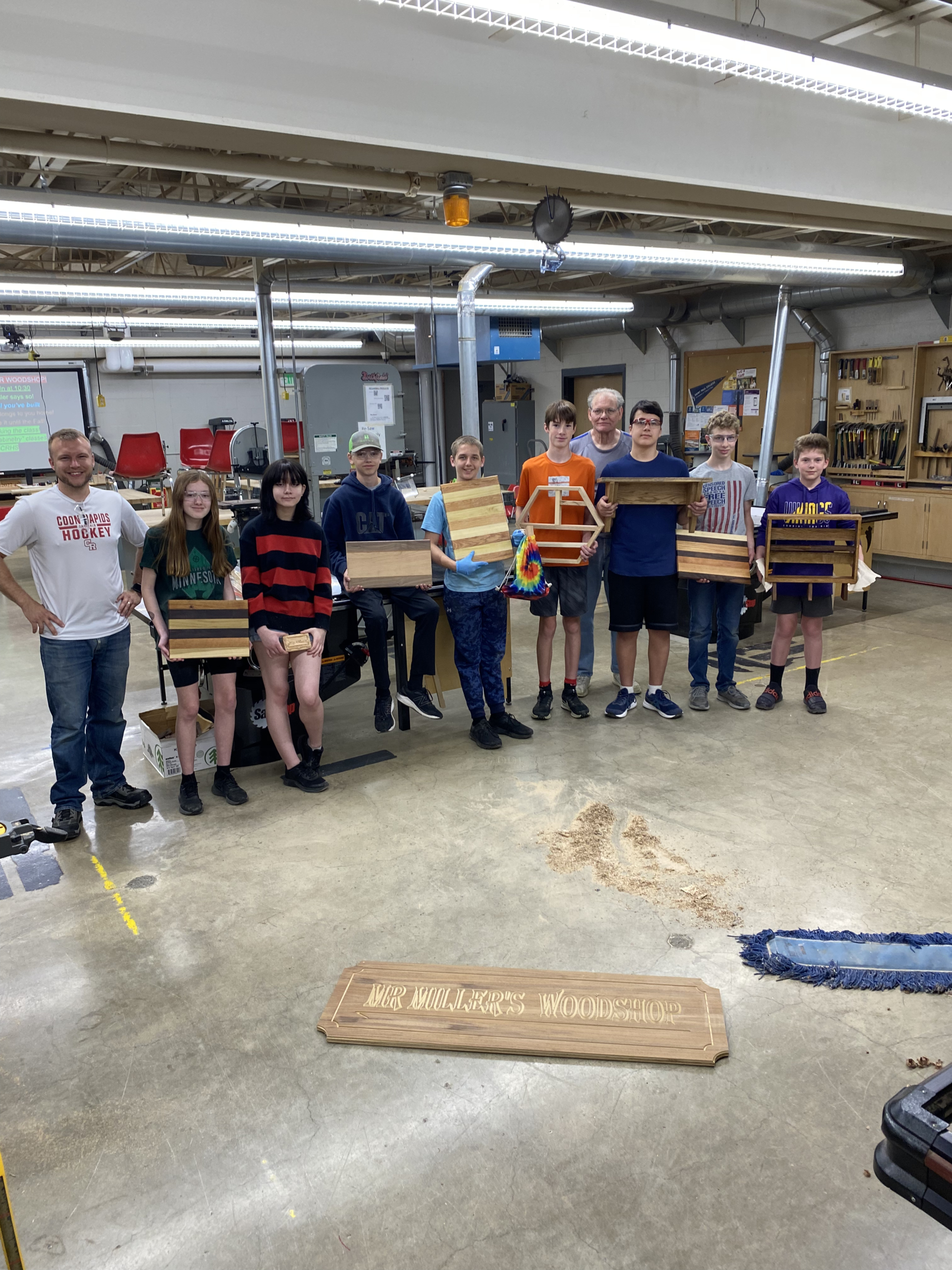
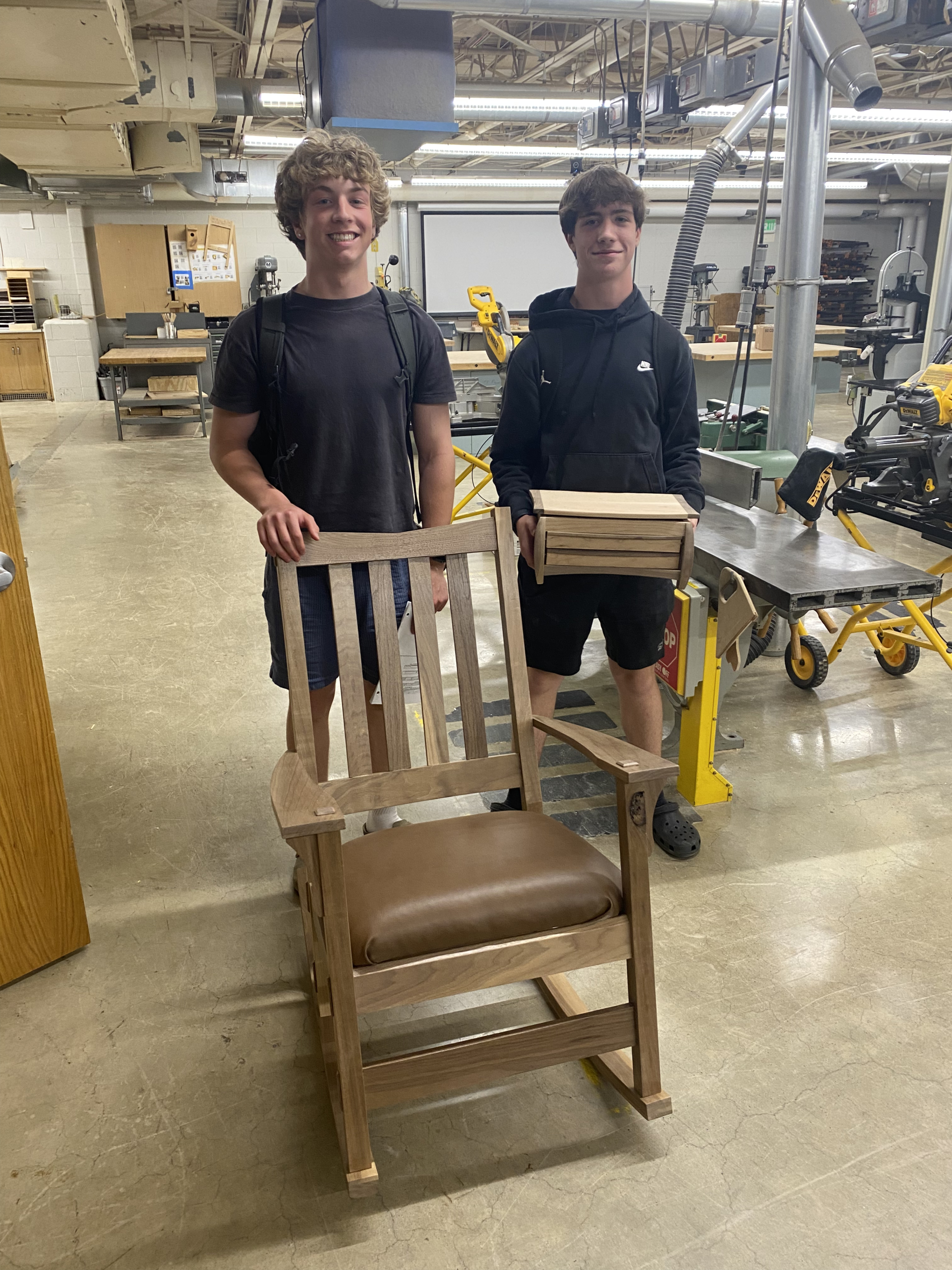
Bobby Miller, left, lines up with students showing off their completed woodworking projects.
Bobby Miller is preparing his students at Coon Rapids High School for potential woodworking careers.
In the heart of Minnesota’s vibrant manufacturing corridor, Bobby Miller isn’t just teaching students how to cut wood; he’s handing them the keys to a career. As an instructor at Coon Rapids High School in suburban Minneapolis, Miller has transformed the traditional shop class into a sophisticated blend of old-world craftsmanship and cutting-edge CNC technology.
His energetic approach to mentoring the next generation earned him the Top Teacher Award from Fox 9 News last year. The honor underscores his commitment to bridging the gap between the classroom and the wood industry, ensuring his students are truly “workforce ready.”
In addition, by partnering with the Woodwork Career Alliance of North America (WCA) and the National Woods Board (NWB), Miller is proving that woodworking is far more than a hobby—it’s a high-reward professional path.
A Legacy of Craftsmanship
Miller’s woodworking journey began at home. “My dad is a woodworker; he built the kitchen cabinets in our house growing up,” Miller recalls. “He’s made my children countless trinkets, toys, and noisemakers. He’s always been a huge influence on me.”
That familial connection was reinforced in high school by an instructor who became a mentor. In a poetic twist, Miller eventually replaced that very mentor when he began his teaching tenure at Cambridge-Isanti High School.
Beyond the classroom, Miller paid his dues in the “industrial trenches.” He spent years in custom shops crafting face-frame cabinetry for million-dollar estates, as well as on the commercial side, participating in high-efficiency production for schools and other environments.
This dual experience—the artisanal and the industrial—forms the backbone of his philosophy. “I love this trade, and I’m encouraged when I see my students pursue it professionally,” Miller says. “When I walk into a hospital waiting room, I’m the guy ‘geeking out’ on the architectural millwork. I try to pass that same perspective on to my students.”
The ‘CNC Millennial’
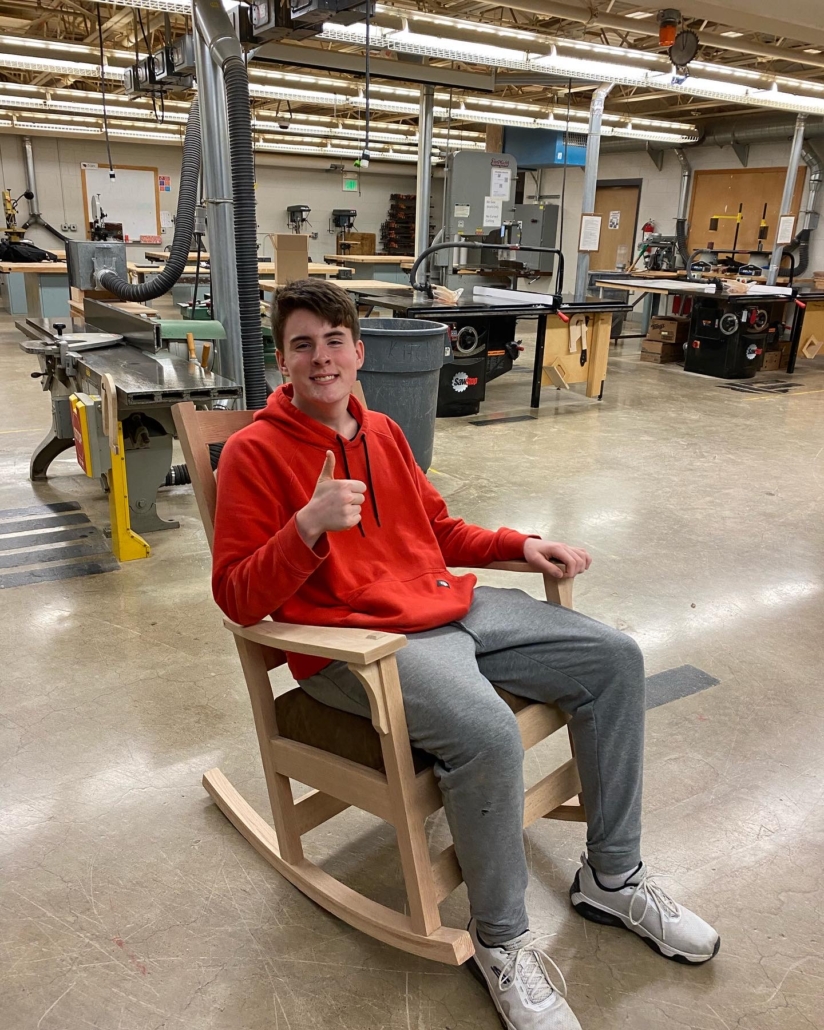
Miller describes himself as a “CNC Millennial.” While the lion’s share of his class time is still devoted to the fundamentals—safely operating table saws, jointers, and power tools, etc.—he knows the future of the trade is increasingly tech driven. Since introducing CNC technology in 2019, he has watched student engagement skyrocket.

In his advanced cabinetry classes, the CNC router is a total game-changer. “The machine can mill all the parts for an entertainment center in under four minutes. Doing that by hand could easily take three weeks,” Miller explains. This “instant” feedback resonates with a generation raised on digital devices, freeing them up to focus on using CAD (Computer-Aided Design) for everything from rocking chairs to musical instruments.
Turning ‘Rebels’ into Professionals
Miller’s shop is often a sanctuary for “non-traditional” students—those with what he calls a “punk rock or rebel attitude” who are eager to bypass the four-year college debt cycle in favor of immediate careers.
“My method is basically trying not to be the gatekeeper,” Miller says. “I have to guard the tools initially because they’re expensive and dangerous. But as soon as a student is trained and tested on the how-to, I turn them loose.”
In addition to his woodworking, welding, and graphic arts courses, Miller launched a woodworking club two years ago to help his most ambitious students compete. The results speak for themselves: last year, one of his students took second place at the SkillsUSA Minnesota cabinetmaking competition.
From IWF to WCA Credentialing to NWB Curriculm
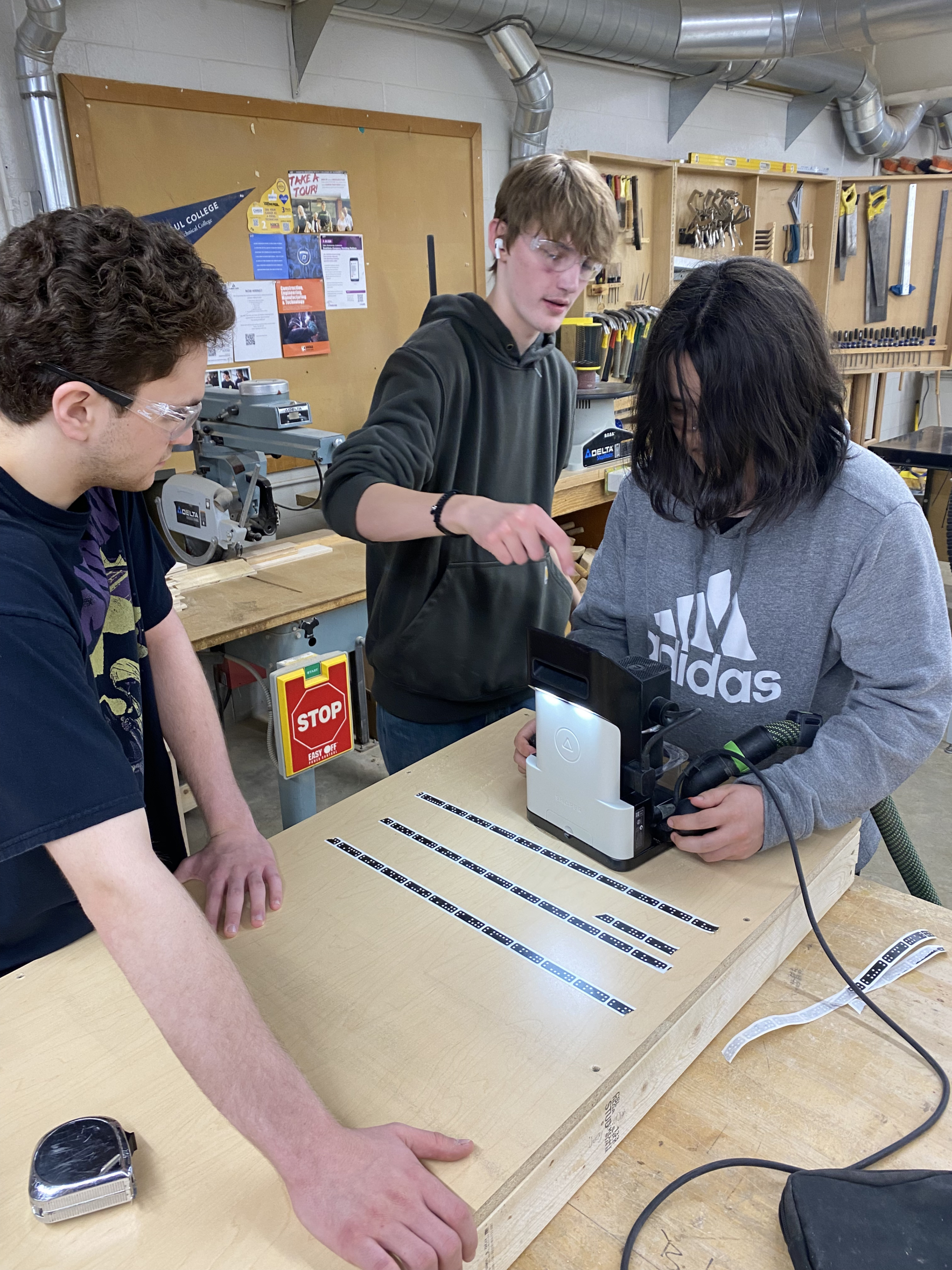
A few years ago, Miller’s program caught the eye of Brian Donahue, president of Safety Speed Manufacturing. Beyond donating a vertical panel router to the school, Donahue invited Miller to the 2024 International Woodworking Fair (IWF) in Atlanta to help out at his company’s booth.
“Walking that show was like drinking out of a firehose,” Miller recalls. “I’d never experienced anything like it—the technology, the products, the networking. It was a real eye-opener.”
During the fair, Miller connected with the WCA and knew immediately he wanted his program involved. He has since integrated WCA Skill Standards into his curriculum. Currently, he is completing the online evaluator training so his students can earn their Sawblade certificates—a portable, industry-recognized credential.
“My job is often dictated by numbers,” Miller notes. “Being able to tell parents and students that they can earn graduation credits and a professional credential is huge for marketing the program.”
Miller’s drive to raise the bar also led him to the National Woods Board (NWB). After his program served as a pilot school for the NWB curriculum—modeled after the renowned MiLL (Manufacturing Industry Learning Lab) in Colorado—Miller was elected to the NWB Board of Directors.
“It’s a complete, big-time curriculum. You aren’t building the plane while flying it,” Miller says. By adopting standardized, industry-vetted projects like the MiLL’s signature end table, Miller ensures his students are learning the exact skills required by professional plants nationwide.
Advisory Board Reaps Multiple Dividends
One of Miller’s greatest achievements is the robust network of industry partners he has built. His advisory board includes 75 active partners who have contributed over $130,000 in equipment, supplies, and cash over the last five years.

These partners are deeply involved. They serve as guest speakers, provide raw materials, and host plant tours as Interscapes and Vision Woodworking did last year for Manufacturing Day.
“Most importantly, my advisors hire my kids,” Miller says. “I’ve had dozens of students move straight into summer jobs or full-time careers.”
To keep the momentum going, Miller operates like a modern marketer. He maintains a dedicated newsletter, a LinkedIn presence, and even a podcast, Mr. Miller’s Workshop, on Spotify and Apple.
“I have partners who come in just to help students write resumes,” Miller says. “The students realize that having a WCA credential or SkillsUSA experience on that resume is huge. It’s recognized everywhere, and it turns a shop class into a career launchpad.”



Leave a Reply
Want to join the discussion?Feel free to contribute!