
Next Step of West Michigan’s Life-Changing Approach to Workforce Development
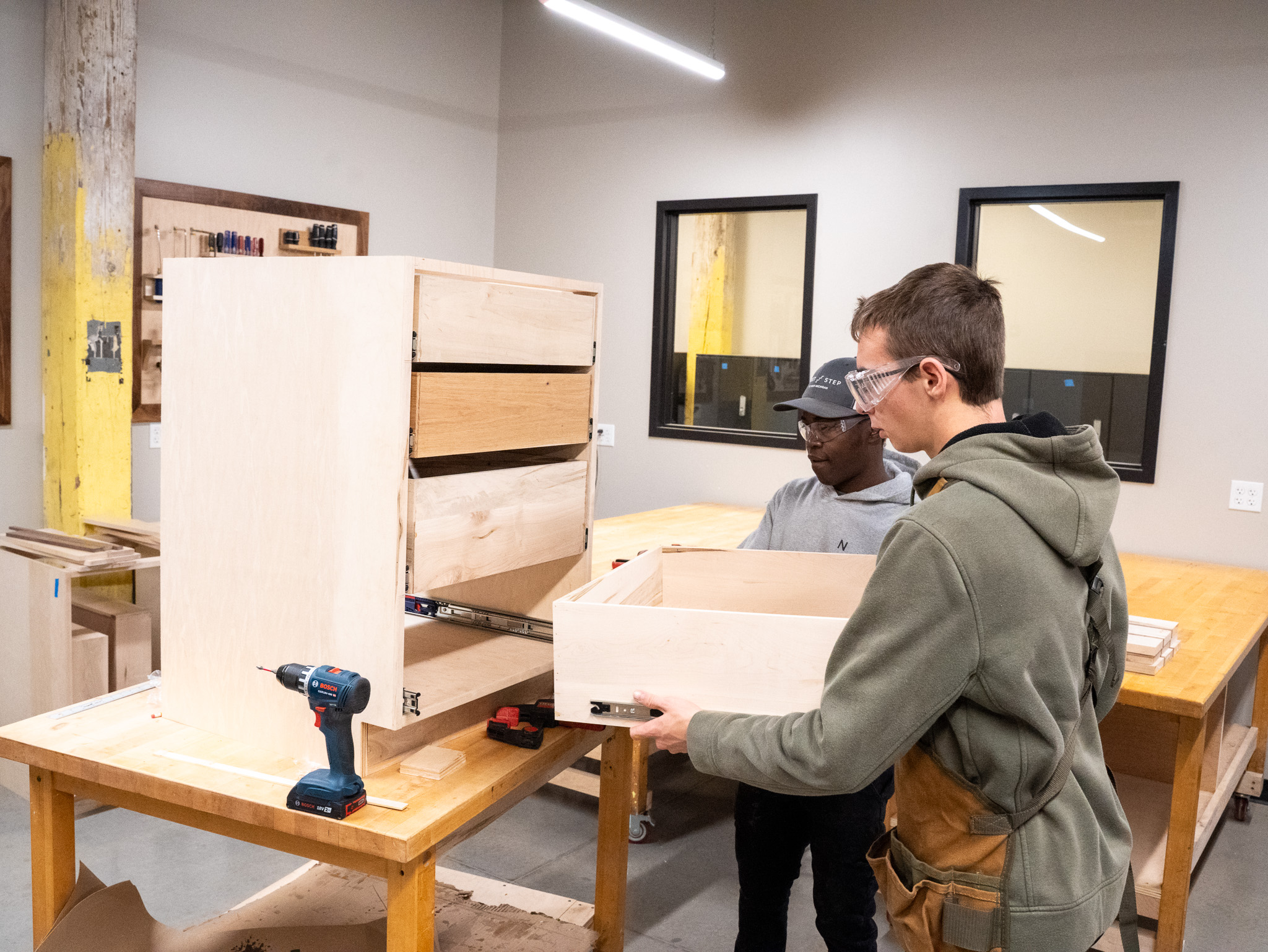
Next Step’s high school program integrates elements of the National Wood Board’s curriculum with the Woodwork Career Alliance of North America’s Passport Credentialing system.
Operating out of a former Kindel Furniture factory in Grand Rapids, Next Step of West Michigan is not only training adults and students to become woodworkers, it’s helping them build better lives.
Founded in 2008, Next Step is a subsidiary of Mel Trotter Ministries. Working together, Next Step and MTM focus on soft skills building, spiritual formation and housing for participants who are experiencing homelessness. In addition to homelessness, Next Step provides job training and placement in wood manufacturing, construction, and city services to individuals facing barriers such as recidivism and addiction.
Next Step is 9th WCA Member to Win WIA Educator Award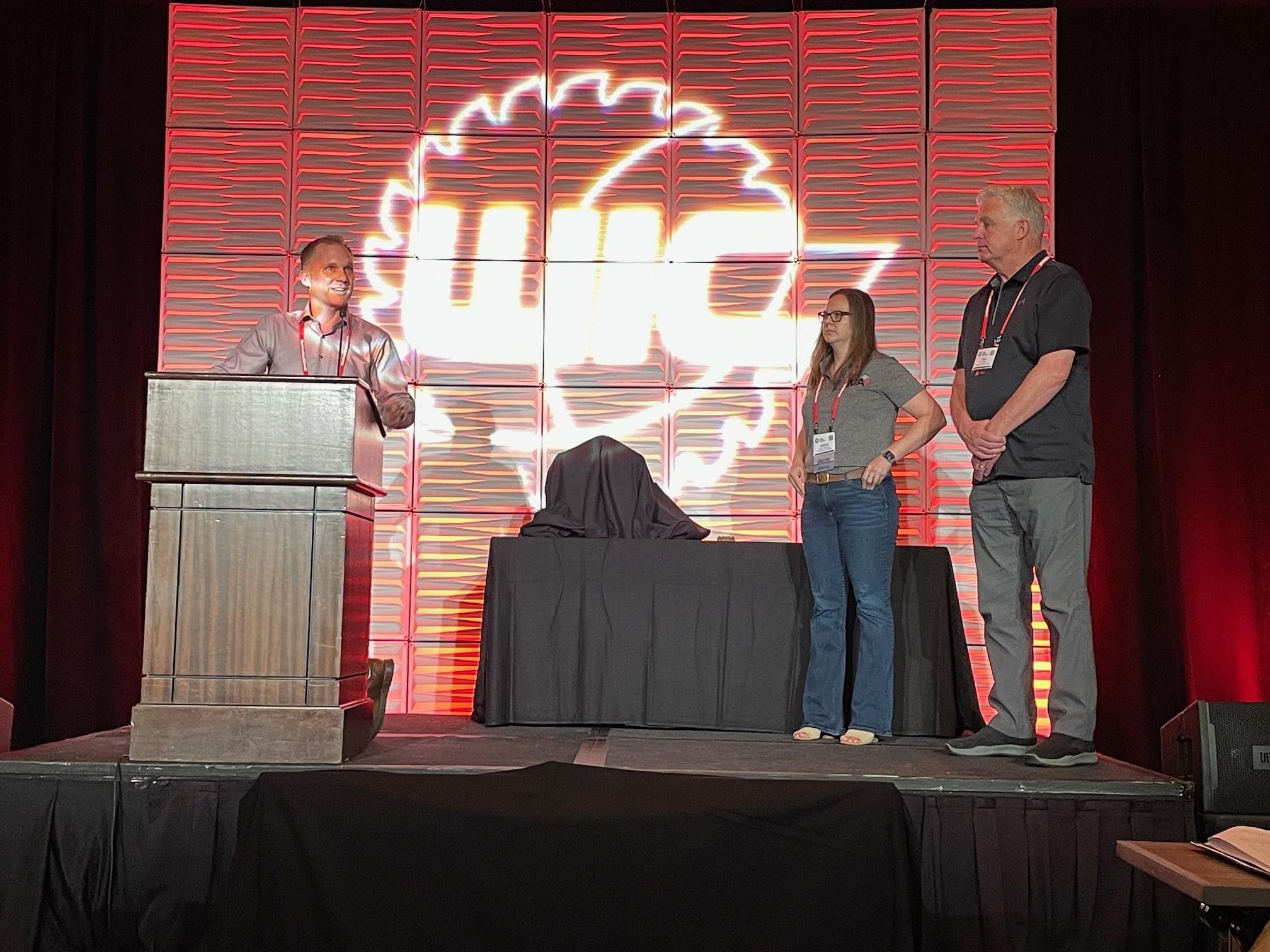 David Bult, executive director of Next Step of West Michigan, accepts the 2025 Wooden Globe Award for Educator of the Year. The WIA Wooden Globe Award for Educator of the Year award is dedicated to recognizing an educational institution or training program that demonstrates exemplary excellence in preparing individuals for successful careers in the woodworking industry. Next Step was chosen for its outstanding demonstration of advocacy, innovation, and measurable impact on workforce development—criteria that resonate deeply with its foundational belief in second chances and skilled work. Next Step joins a long list of WCA affiliates to win the WIA’s prestigious award. The honor roll includes: 2008 — Patrick Molzahn, director of cabinetmaking and millwork, Madison Area Technical College, Madison, Wisconsin 2013 — Dean Mattson, cabinet and wood manufacturing teacher, North Salem High School Woods Program, North Salem, Oregon 2024 — Mark Smith, woodworking instructor, Reed-Custer High School, Braidwood, Illinois |
The WIA Educator Award was accepted by David Bult, executive director of Next Step at the 2025 Wood Industry Conference. Bult joined the organization in 2020 and expanded its focus on workforce development by creating a recurring seven-week woodworking and job skills training program. In 2022, Next Step furthered its commitment to workforce development with the launch of its High School Wood Tech Training Program. Through that program, students from several nearby high schools learn woodworking at Next Step’s training center.
Courtney DeBoer, who joined Next Step last year, serves as training manager.
“Since Courtney came on board, our high school and adult programs continue to expand,” Bult says. “We just launched a third pathway in carpentry training and we’re building Grand Rapids’ first tiny home community. We’re expanding in a lot of different training pathways. We’re trying our best to help bridge the skills gap here.
“Instead of being an employment agency, we get to work with these individuals for seven weeks and get a feel for their personalities – learn who they are and what they’re interested in,” DeBoer says. “We occasionally get someone coming in who is really excited about it and then realizes this is not for them, but the majority are very interested and appreciate that we have community connections and industry partnerships to help them with job placement.”
“We see a lot of people who are really at a low point in life,” Bult says. “A lot of times we’ll get people that say, ‘I used to be a woodworker’ or ‘I used to be a carpenter.’” So, some of them have good foundational skills.
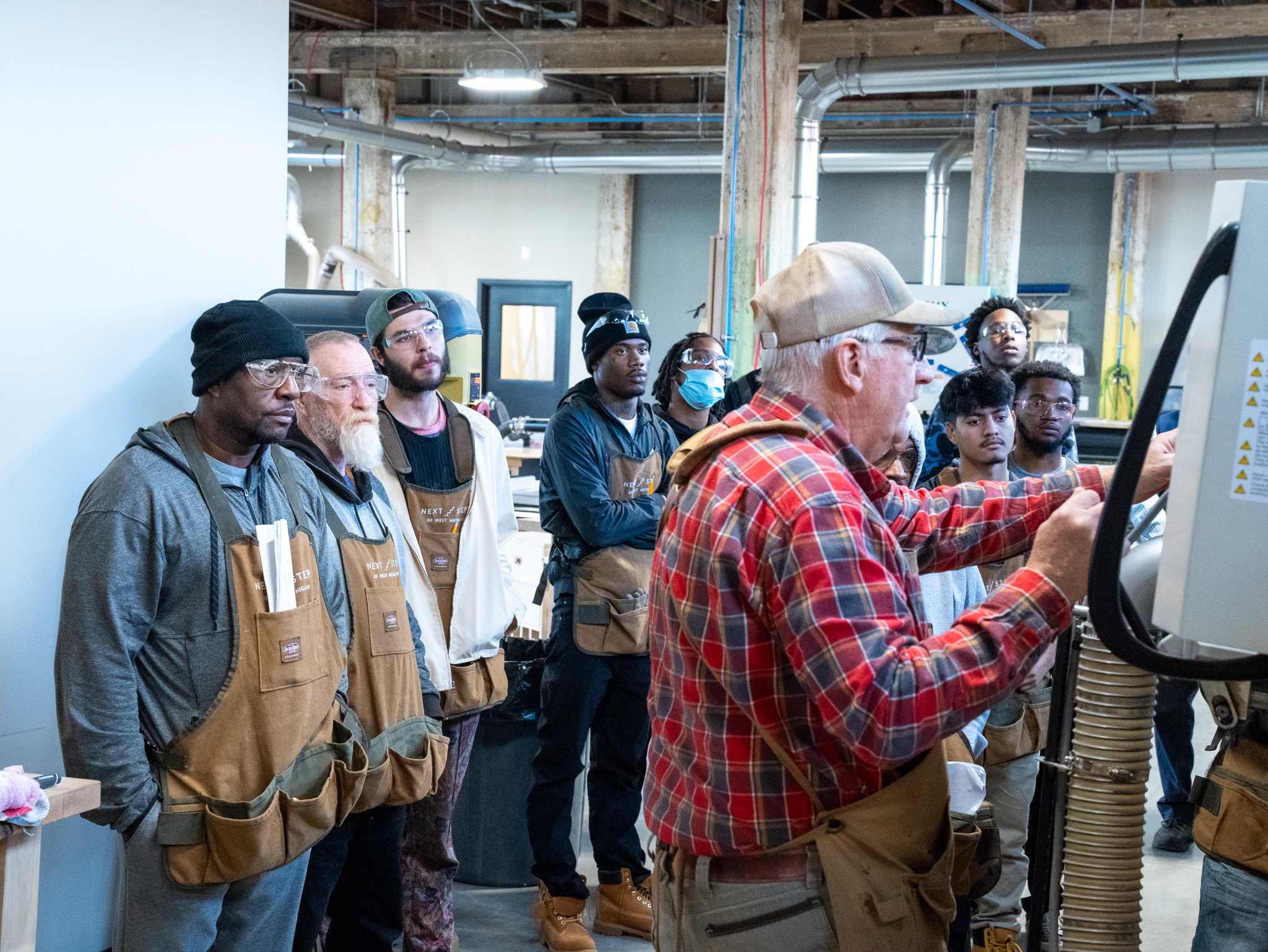
Next Step, a subsidiary of Mel Trotter Ministries, provides job training and placement in wood manufacturing, construction, and city services to individuals facing barriers such as homelessness, recidivism and addiction.
“While the technical skills building is super important, I don’t think our adult graduates would do as well if we didn’t also offer some soft skills building and spiritual development through our Momentum Program,” Bult continues. “It’s very important that we build a community that helps individuals who are healing from the trauma of broken relationships.”
A short list of Grand Rapids-area companies that have hired Next Step trainees includes Kindle Nucraft, Miller Knoll, Steelcase and Grand Valley Wood Products.
The Power of Industry Partnerships
A crucial element of Next Step’s success, and a major factor in securing the national award, is its alignment with national industry organizations, particularly the Woodwork Career Alliance of North America (WCA) and the National Woods Board (NWB). This strategic integration ensures that Next Step’s curriculum remains industry-relevant while providing graduates with credentials that employers immediately recognize and value.
The High School Wood Tech Training Program, launched in 2022, serves as a prime example of this alignment. This project-based curriculum teaches skills and concepts directly applicable to modern wood manufacturing companies. Upon completion, students earn a WCA Sawblade Certificate.
The WCA Sawblade Certification is an industry-recognized, portable credential that signifies a student has achieved a foundational level of competency and safety knowledge necessary to operate basic woodworking machines. By making this certification a core component of its programs, Next Step trains students to be industry ready.
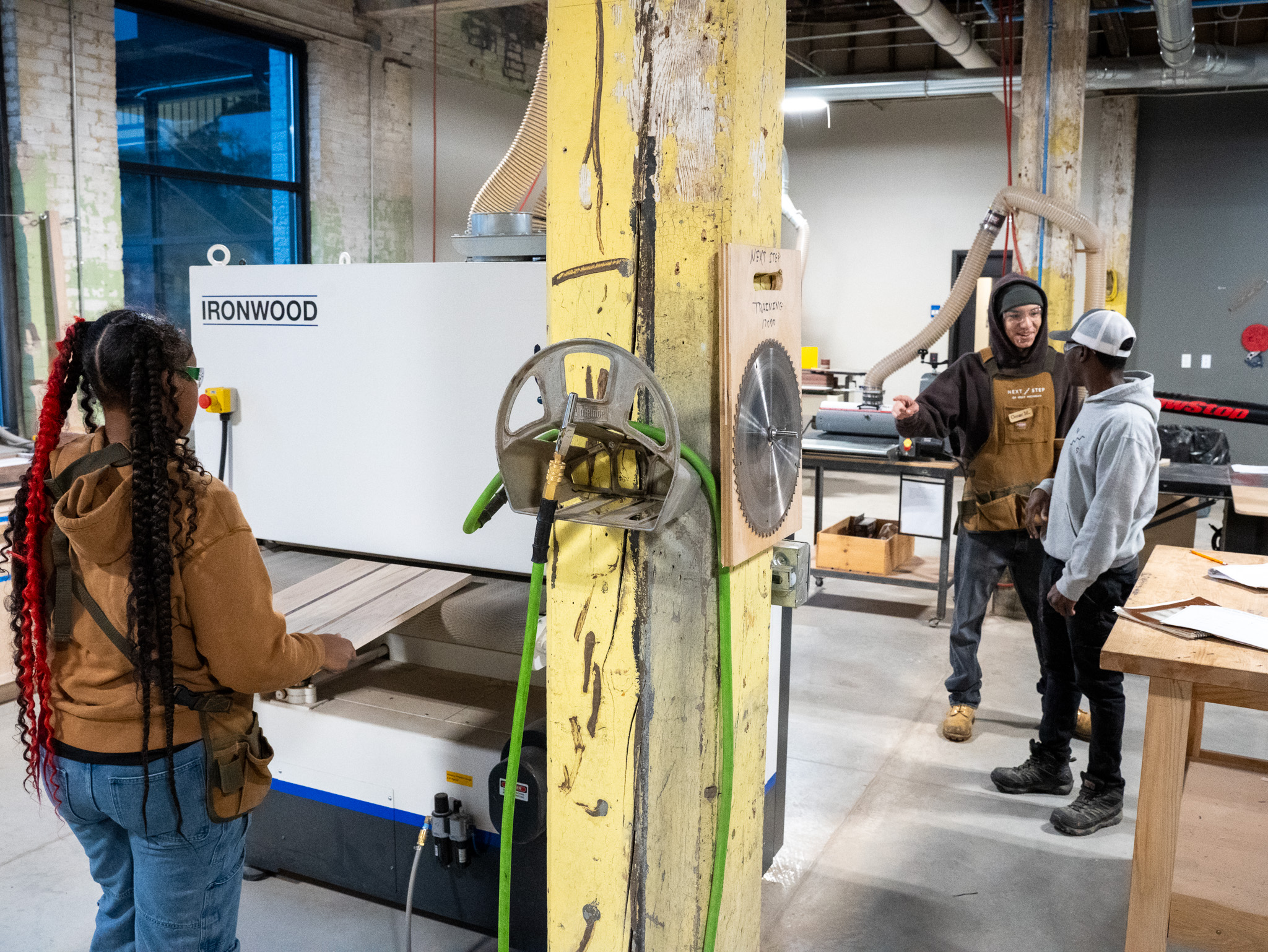 “The high school students coming to our campus for training get credit for the class,” DeBoer says. “They get to learn how to operate industrial equipment and their schools don’t have to build out a lab of their own.”
Next Step’s operational philosophy — focused on preparing individuals for sustainable, long-term employment in the wood products sector — is consistent with the goals of the National Woods Board (NWB). Next Step was one of many woodworking programs around the country to participate in NWB’s pilot program using its curricula initially developed at the renowned MiLL in Colorado Springs, Colorado.
“Part of the reason we did a pilot with the National Woods Board’s curriculum was to help them find out what works and maybe what doesn’t work for a program like ours,” Bult says. “They are talking about how this could be a scalable type of curriculum. Obviously, you don’t know how scalable something is until you start having different types of operations around the country with different sets of machines in their shops and different skill levels for students and instructors try using it.”
“What I really liked the MiLL’s model used by the National Woods Board is that it is project based,” Bult adds. “Students learn that they don’t have to do a rough crosscut on a chop saw to make a cabinet box. They learn to just straight cut parts out of a nice sheet of plywood on a panel saw and then assemble them into a box using biscuits or any other joinery technique. So, based on the National Woods Board curriculum, we have designed our projects where we build a box first. Then our students learn that they can make it special by maybe adding some trim to it, or adding some legs, a hardwood top and a door if they want to.”
“I think it’s been great for our instructors,” DeBoer says. “Although they’ve been in the industry for a long time, it’s helpful to use the curriculum to create their lesson plans based on industry standards.”
 Next Step’s Transformative Adult Program
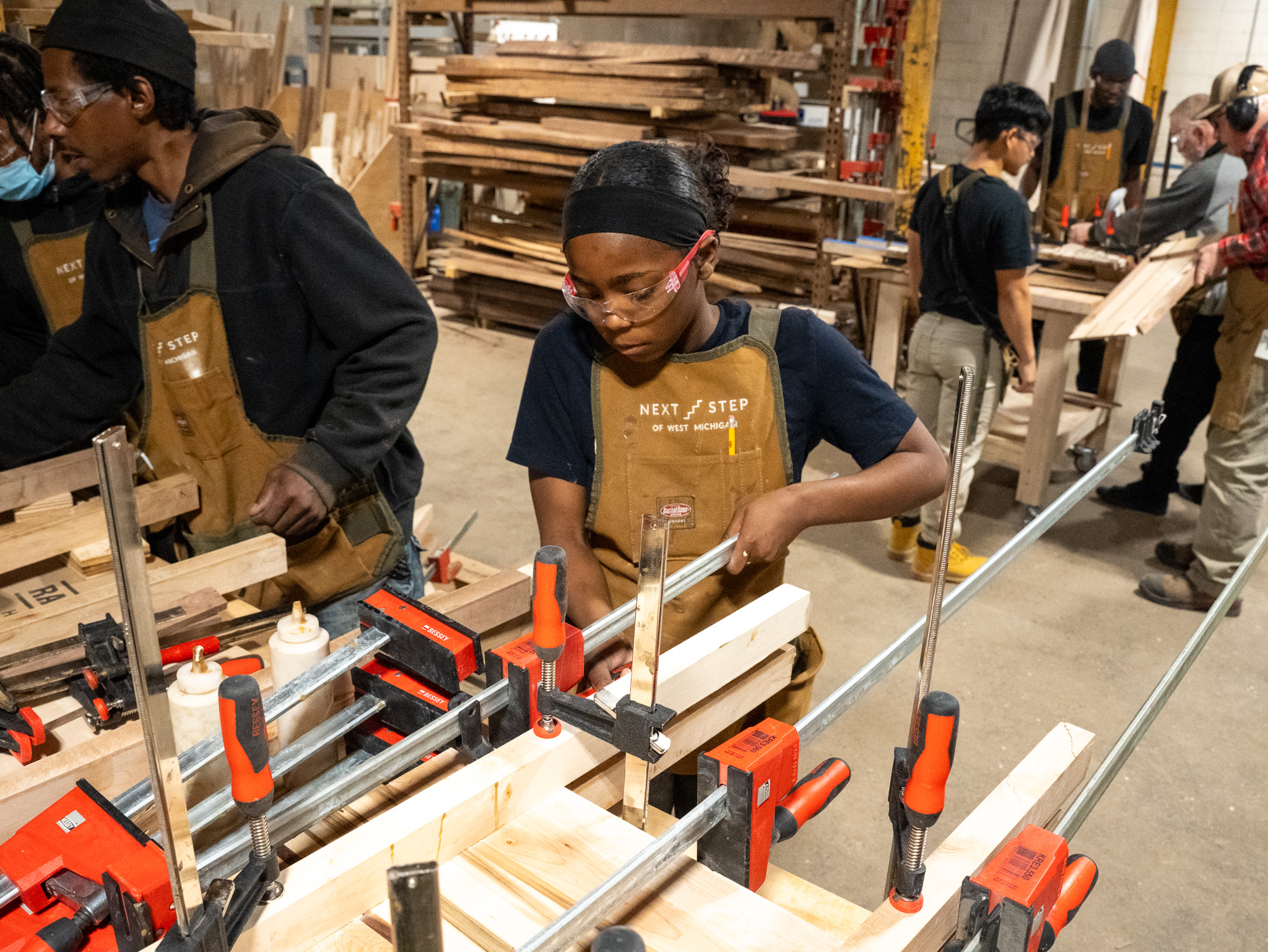
At the heart of Next Step’s training initiatives is the Adult Wood Training Program, an intensive, recurring seven-week course launched in 2020. Recognizing the continuous demand for skilled trades, the program operates year-round, with 10 to 12 participants in each.
The curriculum is structured around immersive, experiential learning. Trainees spend their days gaining hands-on experience, designing and building various wood products individually and collaboratively. They receive rigorous training in the safe and proficient operation of industry-standard machinery, power tools, and hand tools — the very skills required on the floor of a wood products manufacturing facility.
The training extends far beyond the shop floor. Next Step’s holistic approach integrates woodworking skills with vital life skills training and career development. Participants sharpen essential life skills and job readiness techniques in a supportive environment. Over the past 12 years, this comprehensive approach has successfully helped more than 250 individuals launch successful careers in the woodworking industry.
Ultimately, Next Step of West Michigan stands as a testament to the belief that giving someone a job is important, but giving them a craft, a career, and a community is truly transformative.
Learn more at nextstep-wm.org.
Leave a Reply
Want to join the discussion?Feel free to contribute!