National Woods Board Summarizes 2025 Successes and 2026 Initiatives

By Amanda Conger
Executive Director
National Woods Board
2025 was a pivotal year for the National Woods Board (NWB). What started as a bold idea—to make high-quality woodworking education accessible, modern, and industry-driven—has evolved into a proven model that is gaining momentum across the country.
I’m excited to share where we are with our program, what we’ve accomplished with education and industry partners, and how we’re planning to scale our impact in 2026.
2025: From Pilot Program to Proven Pathway
In 2025, our primary focus was turning The MiLL Method from a promising curriculum into a repeatable, scalable program that schools and training centers can confidently adopt.
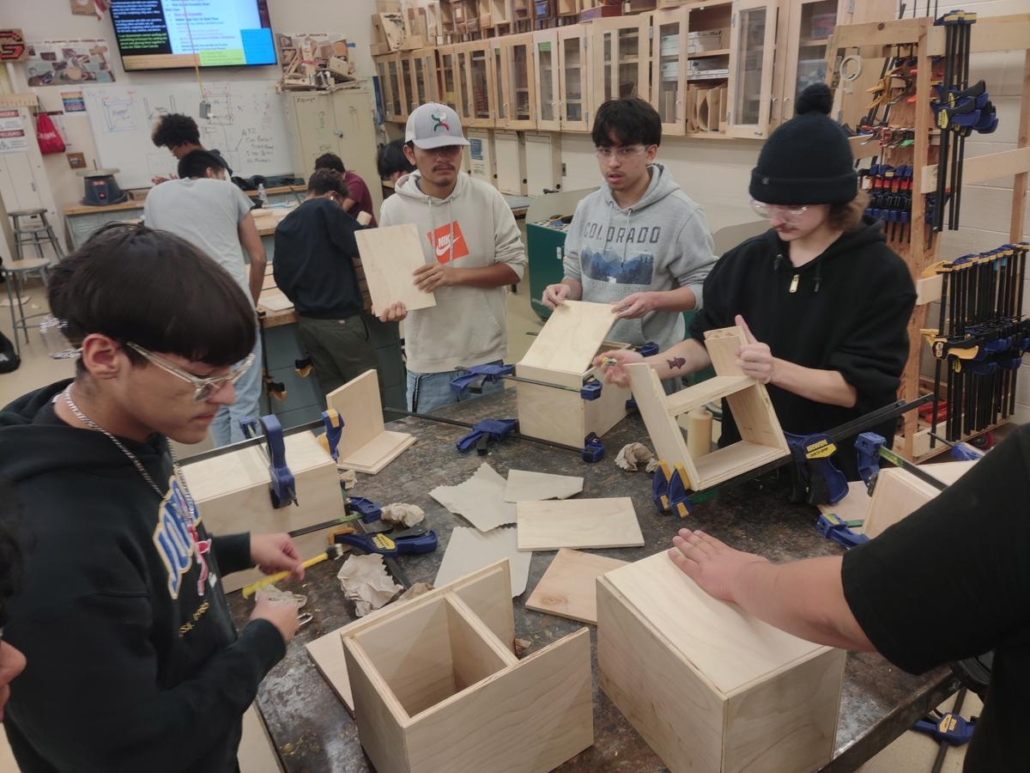
The MiLL Method is a four-level, project-based curriculum designed to move students from foundational skills to advanced woodworking and lean manufacturing practices:
- Foundations 1: Machine safety, core woodworking skills, basic joinery, and introduction to materials
- Foundations 2: Advanced joinery, traditional fine woodworking design, and value-added details
- Foundations 3: Arts & Crafts–inspired design and construction
- Foundations 4: Lean manufacturing concepts with a James Krenov influence and a focus on real-world shop workflow
Throughout 2025, we worked closely with schools, teachers, and industry employers to refine lesson plans, project sequencing, and assessments so that every component of the curriculum ties directly back to the needs of today’s shops—cabinet, millwork, and closet/storage alike.
Strengthening Assessment and Credentialing
A key milestone has been tightening the alignment between our program and industry-recognized credentials, especially with the Woodwork Career Alliance of North America (WCA).
We focused heavily on:
- Clarifying formative and summative assessments across the Foundations levels
- Ensuring that classroom projects support WCA skill standards
- Making it easier for schools to integrate WCA Passport earning opportunities into their programs
The goal is simple: when students complete the NWB curriculum, employers can trust that they’ve been evaluated on real, measurable skills—not just seat time.
Teacher Training: Equipping Instructors to Succeed
We know that even the best curriculum will fall flat without confident, well-supported instructors. That’s why teacher training was another major emphasis in 2025.
This year, we:
- Delivered a multi-day teacher training session that walked instructors through NWB program from both a curriculum and implementation perspective
- Provided an overview of expectations, from project pacing to safety culture to how to prepare students for WCA testing
- Offered deeper dives into the cabinet projects, grading rubrics, and testing processes, so teachers understand not just what to teach, but why each component matters
Instructors consistently told us that having a clear, industry-backed roadmap—and a peer network to lean on—gave them renewed confidence in growing or even rebuilding their programs.
Industry Partnerships & Workforce Development
The National Woods Board exists at the intersection of education and industry, and 2025 was a year of strengthening that bridge.
Across the country, we continued to cultivate:
- Partnerships with employers who provide advisory input, tours, job shadows, internships, and equipment support
- Collaboration with organizations like the Woodworking Industry Association (WIA), North America Building Material Distribution Association (NBMDA), Cabinet Makers Association (CMA), and the Association of Closet & Storage Professionals (ACSP) to ensure that the curriculum reflects the realities of shops of all sizes and specialties
These relationships are not just “nice to have” — they’re the engine that keeps programs relevant, resourced, and connected to real employment opportunities.
Expanding Geographic Reach
Another highlight of 2025 was seeing the NWB programs move from a small cluster of early adopters to a growing network of schools and training providers across multiple states.
We’ve seen interest from:
- High schools looking to modernize or revitalize traditional shop classes
- Career and technical education (CTE) centers seeking structured, industry-vetted curriculum
- Adult and second-chance programs that want to provide hands-on training linked to real jobs
Each new site brings its own strengths and challenges, and each one reinforces the same truth: there is strong demand for woodworking and wood industry careers—when students can see a clear pathway.
Looking Ahead to 2026: Scale, Support, and Sustainability
With the foundation solidly in place, 2026 is about intentional growth—not just “more,” but “better and broader.”
Here’s what we’re focused on in the year ahead:
1. Scaling the NWB Program Nationally
We will continue to onboard new schools and training centers into our program, with particular emphasis on:
- States and regions with strong concentrations of woodworking, cabinet, and millwork employers
- Programs that have community and industry backing but need a structured curriculum to fully realize their potential
- Building regional clusters, where multiple schools in a geographic area can share resources, industry partners, and success stories
2. Deepening WCA Integration
We’re also working closely with the Woodwork Career Alliance to make it even easier for schools to:
- Integrate WCA skill standards directly into their daily teaching
- Use the NWB projects as natural checkpoints for WCA Passport achievements
- Prepare students for credentials that employers recognize and value
Our long-term vision is that a student completing The MiLL Method in high school or post-secondary education is not just “program complete,” but credentialed and career-ready.
3. Strengthening Teacher Support and Community
In 2026, we plan to expand:
- Teacher training opportunities, including in-person intensives and virtual refreshers
- A growing peer community of instructors who can share solutions, troubleshoot challenges, and celebrate wins
- Access to implementation tools such as scope-and-sequence guides, sample schedules, and communication templates for talking with administrators and parents
When teachers feel supported, programs thrive—and students benefit.
4. Building Clearer Pathways for Students
We’re also working to connect the dots for students by:
- Encouraging stronger links between high school and post-secondary programs incorporating the NWB program
- Helping schools showcase career pathways into cabinetmaking, millwork, closets, store fixtures, architectural fabrication, and related fields
- Gathering and sharing student success stories that demonstrate the power of a woodworking education backed by industry
5. Growing Funding and Sponsorship Support
To scale sustainably, we’re actively engaging:
- Industry sponsors who recognize that investing in education today addresses tomorrow’s workforce shortages
- Foundations and donors aligned with career and technical education, trades training, and workforce development
- Partners who can support scholarships, equipment, and teacher training, so programs in under-resourced communities can still deploy high-quality curriculum
How You Can Get Involved
If you’re reading this, chances are you care deeply about the future of this industry. The National Woods Board would love to partner with you.
You can:
- Financially support the NWB so we can continue our mission
- Help connect us with schools or training centers in your area that are ready for a modern, industry-backed woodworking curriculum
- Serve on a local advisory committee for a participating school
- Host tours, student visits, or teacher externships at your facility
The woodworking industry is at its best when it collaborates rather than competes—especially when it comes to building the next generation.
On behalf of the National Woods Board, thank you to everyone who contributed time, resources, and expertise in 2025. We’re proud of what we’ve built together—and we’re just getting started.
If you’d like to learn more about the NWB program or explore partnership opportunities for the future, reach out to me at director@nationalwoodsboard.org.
Learn more at nationalwoodsboard.org.


Leave a Reply
Want to join the discussion?Feel free to contribute!